


Instructional Objectives
Visual Arts
Students will:
- Understand they are embarking on a project through which they will learn about visual arts.
- Be introduced to the art form artists’ books.
- Learn that visual art and writing have parallel processes that enrich communication.
Writing
Students will:
- Be introduced to artists’ and writers’ tools and methods.
- Learn that observation and reflection are part of the creative process used by artists and writers.
- Create a journal for their reflections and observations.
Featured Artworks

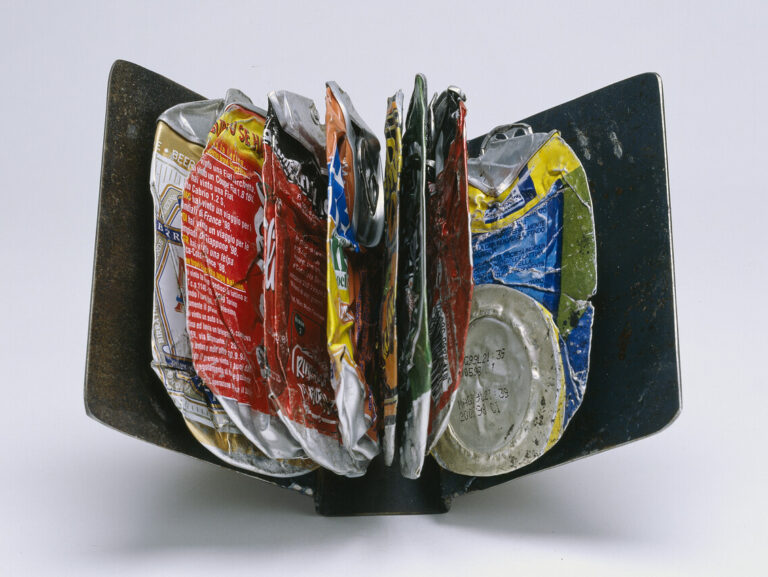
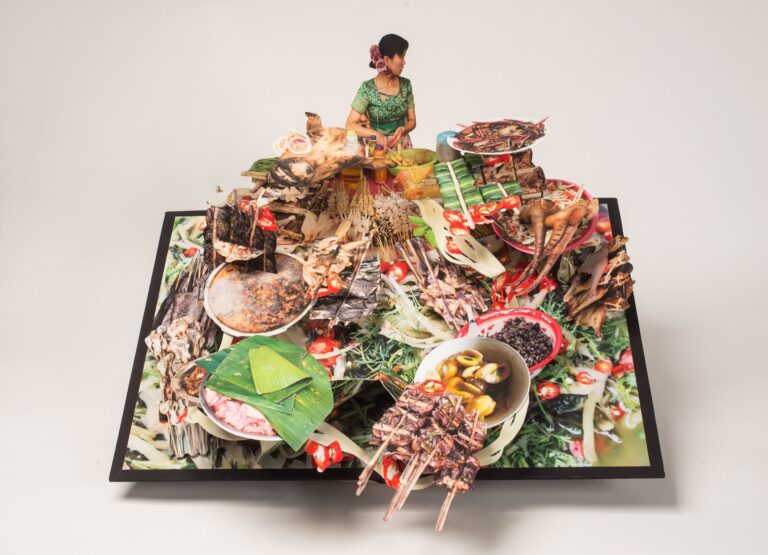
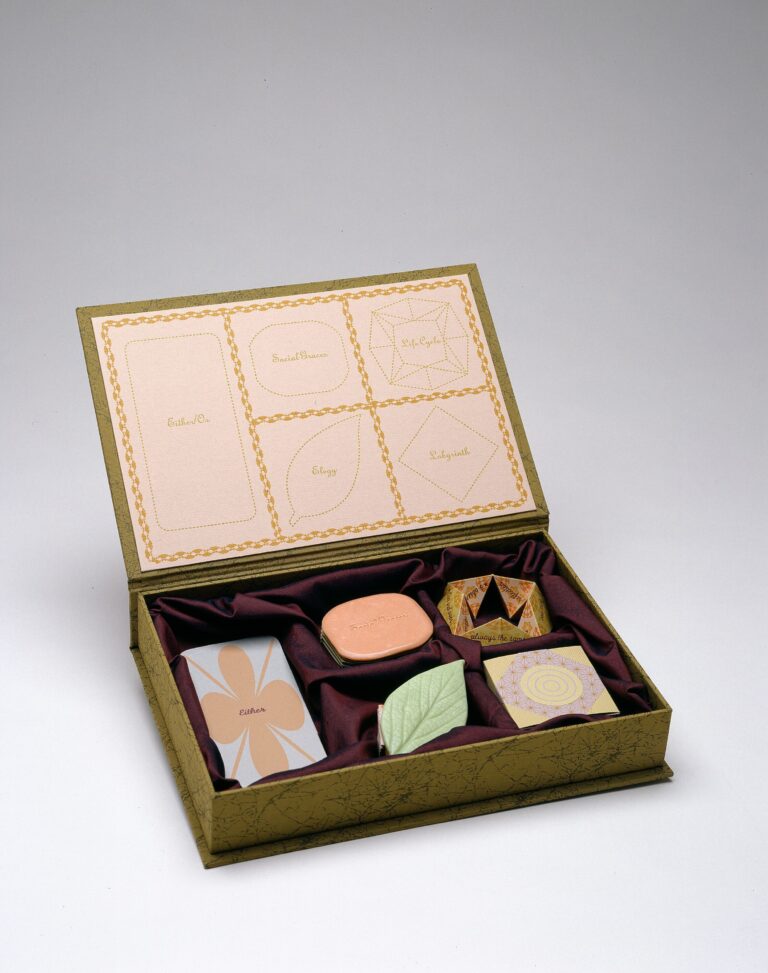
Instructional Plan
Observe

Tell students they are beginning a yearlong project in which they will look at, talk about, and make different kinds of art and investigate the similarities between making art and writing. Observation is an important tool used by artists and writers.
- Can you define what an observation is?
- What is the difference between seeing and observing?
Show students one of the artists’ books in this virtual gallery. Ask students to observe and describe what they see:
- What is the shape of the book?
- What materials did the artist use to make it?
- How would you hold it?
- How would you read it?
- How is this book similar to and different from a book found at a library?
- How would you describe this artist’s book to someone who can’t see it?
Compare


Show another artist’s book to students and ask the same questions. Compare the two books, noting similarities and differences between them; then compare artists’ books and regular books. Emphasize the variety of the art form by briefly showing additional examples of artists’ books.
Summarize the discussion by noting that students used their observational skills to investigate and describe various artists’ books. They will use observation throughout the project to help them learn about and create visual art and writing.
Create: Rubber-Band Journal
Supplies
- 8 1/2-by-14-inch copy paper, 5 to 10 sheets per student
- 9-by-15-inch construction, drawing, or watercolor paper for cover, 1 sheet per student
- 1 stick (6 in. to 8 in. long), or use a pencil, twig, chopstick, straw filled with pipe cleaner, etc. per student
- 1 rubber band, at least 3 in. long per student
- Hole punch or scissors
- Paper clips
Activity
Make the Pages
- Begin by placing one sheet of 8 1/2-by-14-inch paper horizontally on the desk in front of you. (One of the paper’s long sides will be closest to you.)
- Fold the paper in half by bringing the two short sides together. Line the edges up as evenly as possible and crease firmly.
- Open the paper back up. Using a ruler, measure 2 inches down from the top edge of the paper and make a pencil mark on the creased line at that point. Now, measure 2 inches up from the bottom edge of the paper and use a ruler to make a pencil mark on the crease at that point. Set this sheet to the side.
- Using your pencil marks as a guide, make two holes on the folded edge of the paper using a hole punch. You can also use scissors to cut two notches out of the folded edge.
- Repeat all of these steps for your remaining sheets of paper.
- Finally, nest your completed pages together so that the punched holes line up. Set your completed pages to the side.
Make a Cover
- Begin by placing one sheet of 9-by-15-inch construction, drawing, or watercolor paper horizontally on the desk in front of you. (The longer side of the paper will be closest to you.)
- Fold the cover paper in half by bringing the two short sides together. Line the edges up as evenly as possible and crease firmly.
- Open the paper back up. Using a ruler, measure 2 1/4 inches down from the top edge of the cover paper and make a pencil mark on the creased line at that point. Now, measure 2 1/4 inches up from the bottom edge of the paper and use a ruler to make a pencil mark on the crease at that point. Set this sheet to the side.
- Using your pencil marks as a guide, make two holes on the folded edge of the cover paper using a hole punch. You can also use scissors to cut two notches out of the folded edge.
Assemble Rubber-Band Journal
- Place your nested pages inside your cover, lining up the holes.
- Open the book, and thread the rubber band through the bottom hole on the inside of your book and pull it through to the outside. You will want a loop about 1/2-inch long to be visible on the outside. Place one end of your stick into this loop.
- Thread the other end of the rubber band through the top hole on the inside of your book and loop it around the top end of the stick.
- Have students write their names on their journals.
Reflect
Ask students to think about what they have learned in this lesson and write a few sentences about it in their journals. Use one or more of the following prompts:
- How do you think you will like this project?
- What questions do you have about the project?
- Looking at artists’ books makes me wonder…?
Vocabulary
Explore NMWA’s list of vocabulary terms for a consistent description of visual arts concepts and definitions of art terms.
- Observation
Observation is a process of gathering information through the senses (hearing, sight, smell, taste, or touch) and then analyzing the information.
- Elements of Art
Elements of art are color, line, shape, value, and texture. Artists use these tools to create all visual art: representational, abstract, and non-representational.
- Reflection
Reflection is an activity in which an experience is remembered, thought about, and evaluated. Interpretation is the process of constructing the meaning of an object, work of art, or writing through observation and reflection.
- Traits of writing
Traits of writing are ideas, voice, word choice, organization, sentence fluency, and conversations. Written works are created using the traits of writing.
- Artist's book
An artist’s book is an art form that uses elements of traditional book forms in combination with the elements of art.