

Art Is For Everyone. Help Make Access Possible.

Keep art accessible and women artists visible. Make your gift by June 30 and help us finish our fiscal year strong.    

A woman with light colored skin, wearing a black top and white pants, talks to a group of people in a gallery room. She stands in front of a large, painted portrait of a woman in a high-collared red dress.
National Museum of Women in the Arts

Pasadena Lifesavers Red #5
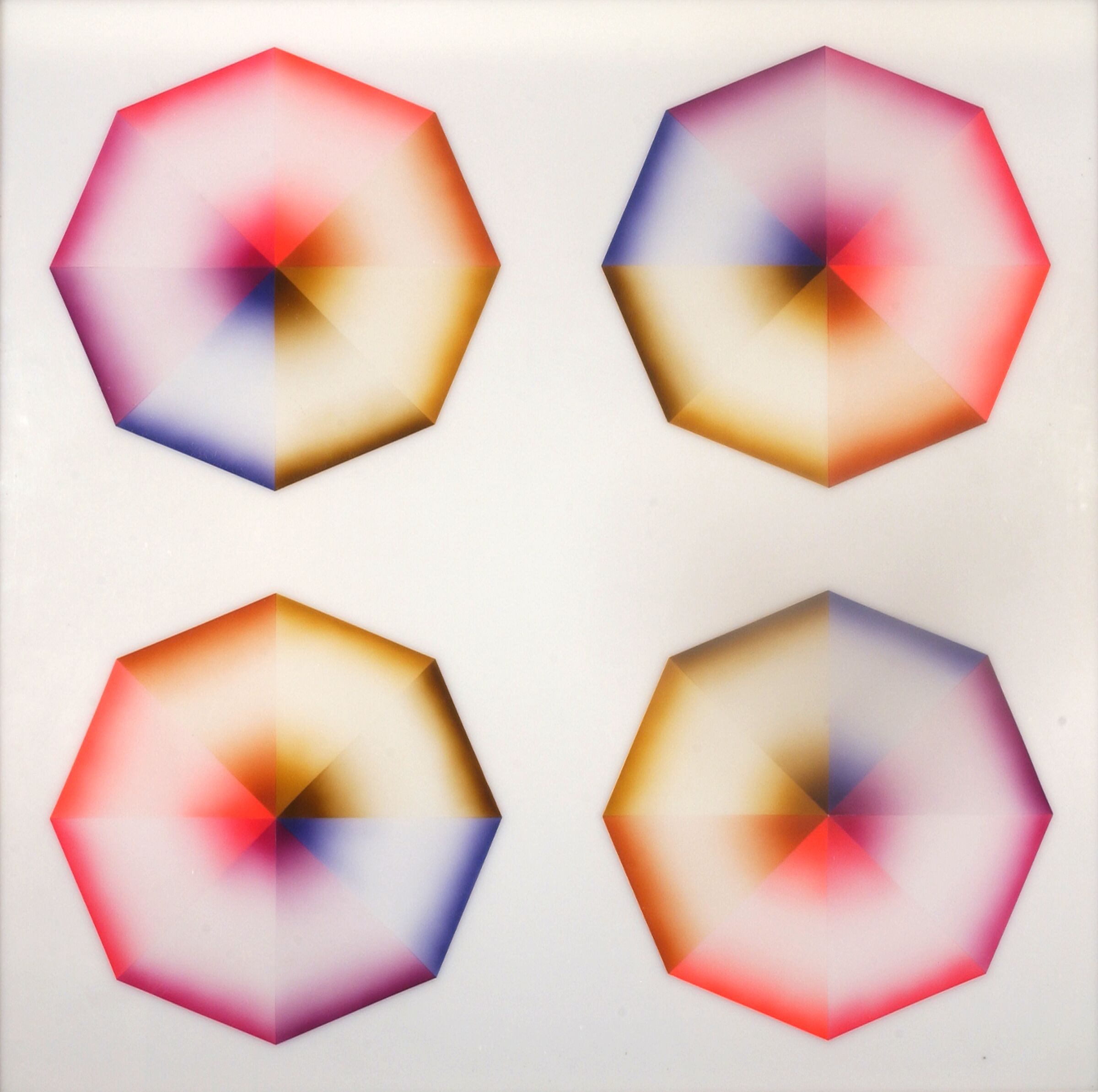
Four hard-edged octagons, each divided into eight pie-slice shapes painted red, pink, orange, yellow, olive green, blue, violet, or lavender, occupy a square, white background. Dark at the wide and narrow ends of each wedge, the hues create the illusion of 3-dimensional forms.
Judy Chicago, Pasadena Lifesavers Red #5, 1970; Sprayed acrylic lacquer on acrylic, 60 x 60 in.; National Museum of Women in the Arts, Gift of Elyse and Stanley Grinstein; © Chicago Woodman LLC, Judy Chicago/Artists Rights Society, New York
Close up of Pasadena Lifesavers Red #5
Four hard-edged octagons, each divided into eight pie-slice shapes painted red, pink, orange, yellow, olive green, blue, violet, or lavender, occupy a square, white background. Dark at the wide and narrow ends of each wedge, the hues create the illusion of 3-dimensional forms.

Prior to creating consciously feminist art, Judy Chicago contributed to the 1960s art movement called Los Angeles Look, which paralleled the popular practice of customizing cars and surfboards. Paintings from Chicago’s “Pasadena Lifesavers” series each feature four circular or octagonal-shaped forms airbrushed onto shiny acrylic sheets.

Chicago attended auto-body school to learn airbrushing, and the meticulously applied finishes and luminous, gradated hues of her Lifesavers paintings laid the aesthetic foundations for her later work.

Living in southern California in the 1960s, Chicago was friendly with the mostly-male Look artists, who made works from glass, fiberglass, or resin, but she felt that Los Angeles’s art scene had no room for her feminine sensibility. Consequently, her methods and materials aligned with the Look style, but she developed imagery signifying her experiences as a woman. Chicago’s Domes sculptures from 1968—sprayed acrylic half-spheres resembling breasts—and Pasadena Lifesavers Red #5 are among the first works in which she created imagery that suggests the female sexual body but allows for multiple interpretations.

Artwork Details

  • Artist

    Judy Chicago
  • Title

    Pasadena Lifesavers Red #5
  • Date

    1970
  • Medium

    Sprayed acrylic lacquer on acrylic
  • Dimensions

    60 x 60 in.
  • Donor Credit

    Gift of Elyse and Stanley Grinstein
  • Image Credit

    © Judy Chicago/Artists Rights Society, New York
  • On Display

    Yes