

Symphony
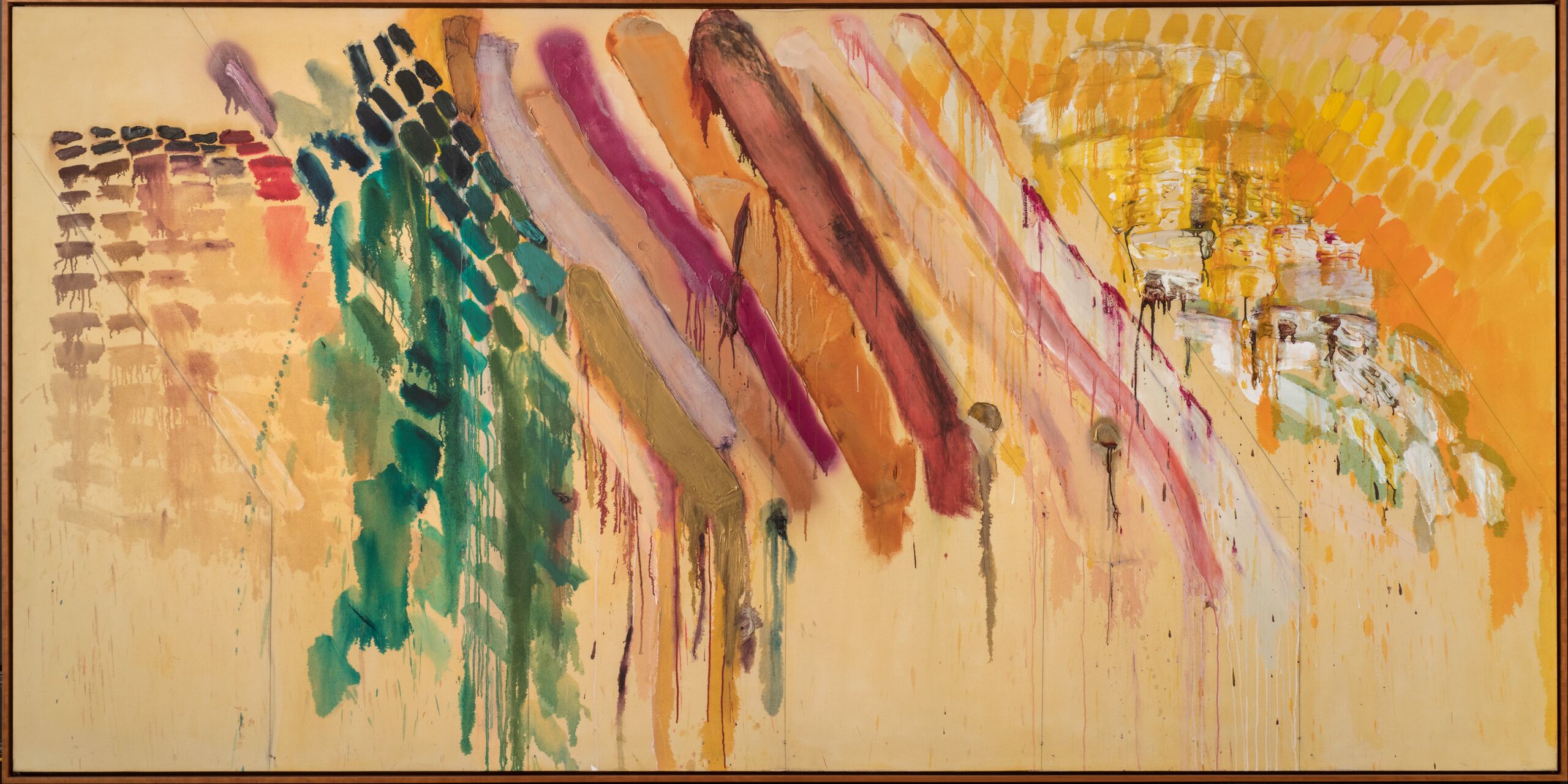

In Joan Snyder’s abstract Symphony, bold, gestural brushstrokes sprawl, drip, and trip across a lightly sketched grid, evoking the notes of a musical score and expressing a complex emotional narrative. Horizontal brushstrokes march across the picture plane, moving from left to right in a punctuated staccato. They build in momentum, lengthening and intensifying into a concentrated rhythm that reaches its crescendo at the middle with long, diagonal strokes of red, magenta, pink, and orange, before dissipating, once again, into staccato. Paint is thus the primary character of a musical narrative, evoking a range of emotional states as it progresses across the canvas.
Snyder created Symphony in a deliberate contrast to the Pop Art and Minimalist movements, which often sought to eradicate signs of the artist’s hand by embracing machine fabrication and generic titles. To Snyder, these were “masculine” qualities. She set out to create a contrasting “feminine” language of abstraction that was expressive, autobiographical, and narrative. She later said, “I loved the idea of narrative—being able to express many emotions in one painting, as in a song or symphony.”
