


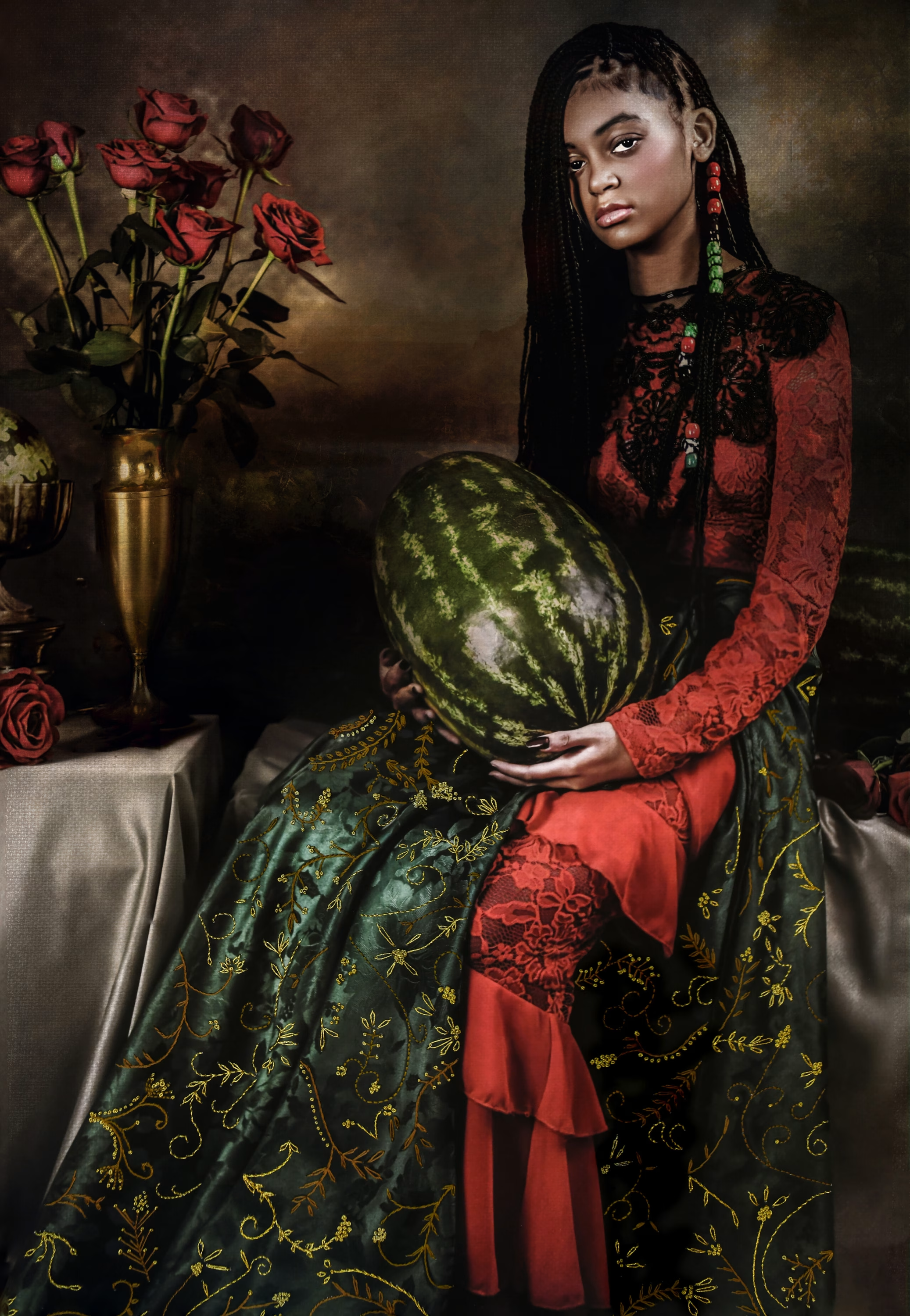
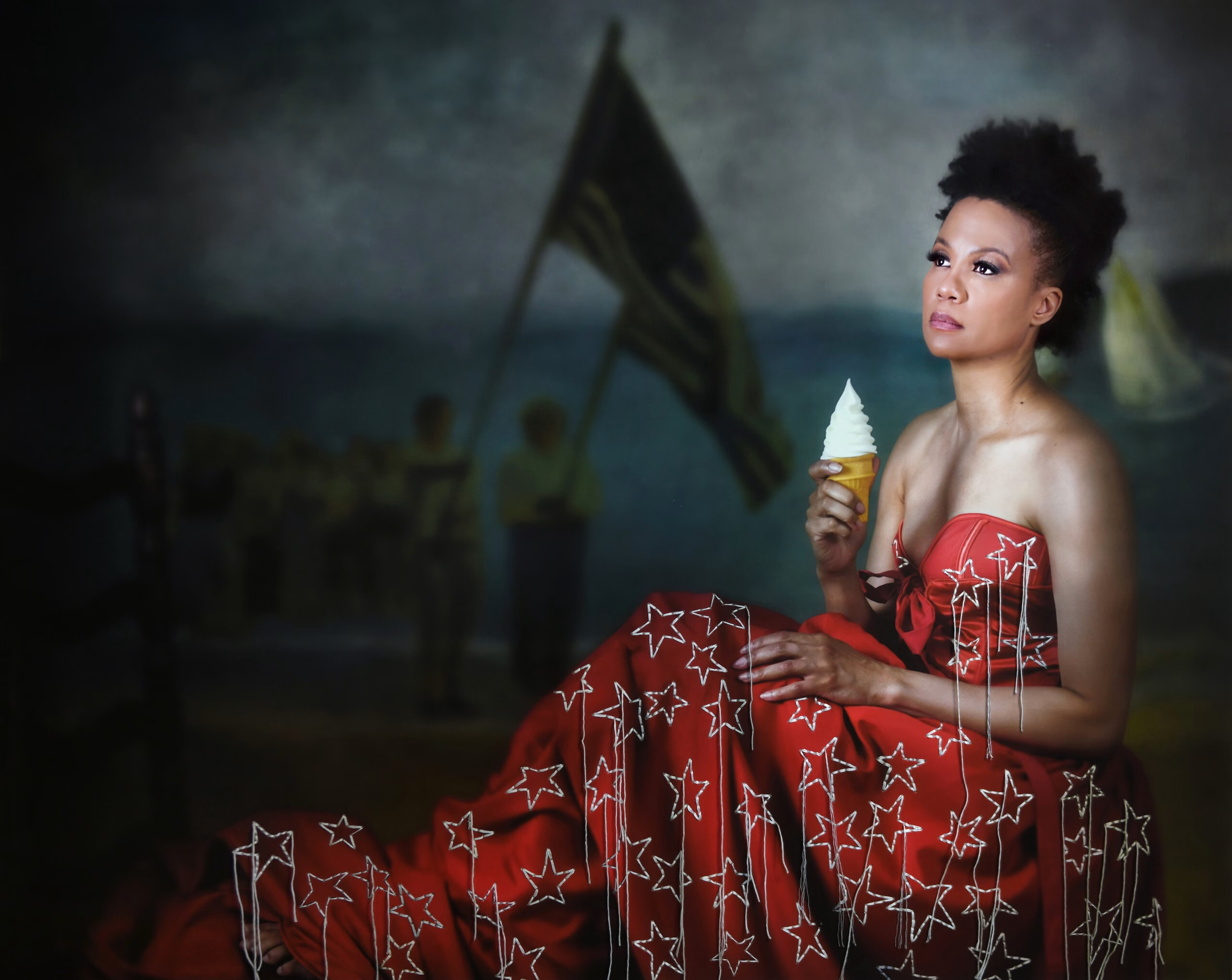
Tawny Chatmon: Sanctuaries of Truth, Dissolution of Lies presents more than 25 large-scale photo-based works that celebrate Black culture and challenge bias. Chatmon draws from historical decorative motifs and African American cultural markers to create her lush and powerful portraits.
NMWA’s exhibition debuts two new bodies of work by the artist. “The Reconciliation” (2024 to present) addresses stereotypes and misconceptions surrounding race and food. “The Restoration” (2024 to present) removes racist dolls and figurines from circulation as Chatmon lovingly refinishes them and photographs them as new heirlooms in the hands of Black children.
Curious about the context that informs Chatmon’s work? Read on for some of the resources that have shaped her themes and hear about important takeaways from the artist herself.
Books
Watermelons, Nooses, and Straight Razors: Stories from the Jim Crow Museum (2017) by David Pilgrim
“Pilgrim traces the evolution of the watermelon caricature from its early origins. Long before America weaponized it, watermelon thrived in Sudanese soil. The relationship between people of African descent and the watermelon predates its racialization in the U.S,” Chatmon says.
Eating While Black: Food Shaming and Race in America (2022) by Psyche Williams-Forson
“Williams-Forson highlights the ingenuity of enslaved Black people, emphasizing that they hunted, foraged, and fished to feed themselves and their families, challenging the misconception that they simply waited around for scraps. This tradition of creativity and resourcefulness is vividly reflected in Black culinary heritage.”
High on the Hog: A Culinary Journey from Africa to America (2011) by Jessica B. Harris
“In both the book and the [Netflix] docuseries, Harris explores the significance of yams and sweet potatoes, [highlighting] the difference between them. Yams are not grown in the U.S. because they require a tropical climate, unlike sweet potatoes, which thrive here. Yet generations of African Americans have continued to call sweet potatoes yams out of habit and history. This misnaming…reflects how enslaved Africans preserved pieces of their heritage, even as they were forced to adapt to new lands and crops.”
Additional Books:
The Art and History of Black Memorabilia (2000) by Larry Vincent Butler
I Know Why the Caged Bird Sings (1993) by Maya Angelou
Zami: A New Spelling of My Name (1982) by Audre Lorde
Online Resources
“Slave Narratives from the Federal Writers’ Project, 1936 to 1938” (Library of Congress)
“Scholars and historians have debated the limitations of ex-slave narratives, noting that most interviewers were white, which likely influenced [the subjects] to self-censor or tailor their stories. Despite these complexities, the narratives offer critical insight into the lived experiences of formerly enslaved people and remain indispensable to our understanding of that period of American history.”
“Nourishing Our Nation: A Brief History of African American Cuisine” by Ashley Sankey (Atlanta History Center, June 2024)
“James Hemings, a chef enslaved by Thomas Jefferson…learned from French chefs. Though denied recognition, Hemings popularized dishes such as French fries, vanilla ice cream, and macaroni and cheese, shaping the nation’s cuisine. These traditions form a lineage that influenced countless families—including my own.”
“Juneteenth: A Celebration of Freedom” by Stephanie Hall (Library of Congress, June 2016)
“While Juneteenth is often recognized as the end of slavery, it is essential to note that states such as Delaware and Kentucky continued to enslave Black people until the 13th Amendment was ratified months later. Newly freed Black people celebrated as the news of freedom spread. These early celebrations gave birth to Juneteenth traditions that traveled across states as families searched for one another.”
Additional online resources:
“Popular and Pervasive Stereotypes of African Americans” (National Museum of African American History and Culture)
“How Watermelons Became Black: Emancipation and the Origins of a Racist Trope” (Journal of the Civil War Era, March 2018)
“What Was Jim Crow?” (Jim Crow Museum, Ferris State University)
Want to learn more? Visit NMWA’s Betty Boyd Dettre Library and Research Center to explore some of these resources and to read more from Chatmon.
Tawny Chatmon: Sanctuaries of Truth, Dissolution of Lies is on view through March 8, 2026.