


Women played a vital role in shaping the visual culture of the Low Countries, present-day Belgium and the Netherlands, during the 17th and early 18th centuries. Women Artists from Antwerp to Amsterdam, 1600–1750 is the first-ever survey exhibition of women artists from this region and time period. Including more than 40 artists, with many works on view in the United States for the first time, it demonstrates that women were an active and consequential part of one of the most robust and dynamic artistic economies of the era.
Choices
The options available to women artists in this period, whether to marry, pursue specialized training, and much more, depended largely on their social class and family connections. While painters tended to come from the middle and upper classes, lower-class women comprised the majority of lacemakers and embroiderers. Middle- and upper-class women could study with professionals to hone their skills. Lower-class girls and women usually had no choice but to work, and many produced textiles, often as domestic workers, in orphanages, or in correctional institutions.
Marriage and childbearing also shaped the course of women’s lives, though its effects, again, were dependent on social class: those with the means to hire domestic help were more likely to continue their work, while others found that domestic responsibilities left little time for their art. Some women who joined religious orders or remained unmarried found independence to continue their artistic pursuits.
Learning by Necessity
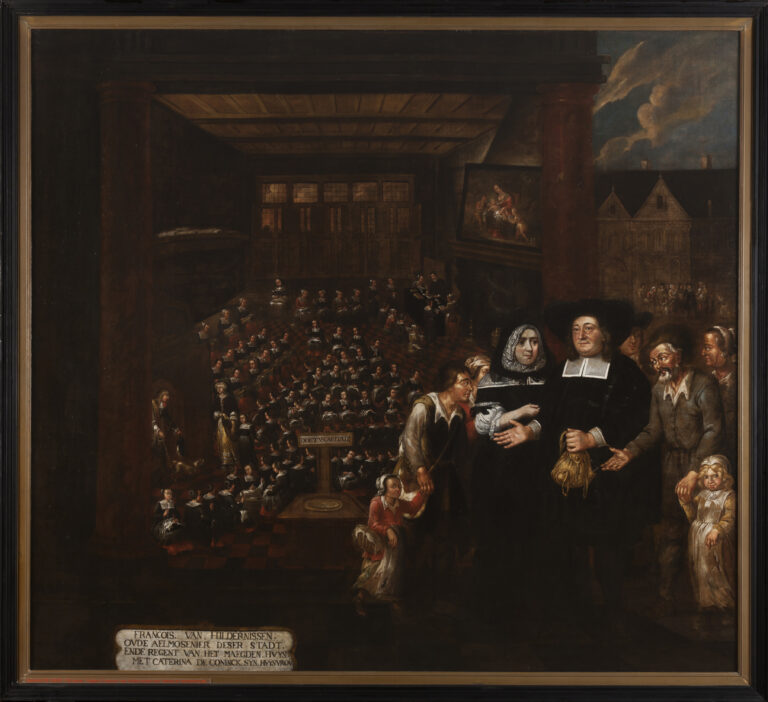
A 17th-century painting from the Maagdenhuis (Maiden’s House), a home for impoverished or orphaned girls in Antwerp, depicts the benefactor and his wife in the foreground, while behind them are scores of girls busy embroidering and making lace. Charitable institutions such as this one provided homes for lower-class and orphaned girls as well as training in skills for work. Lace was a highly expensive commodity, and Flanders was known for producing some of the best.
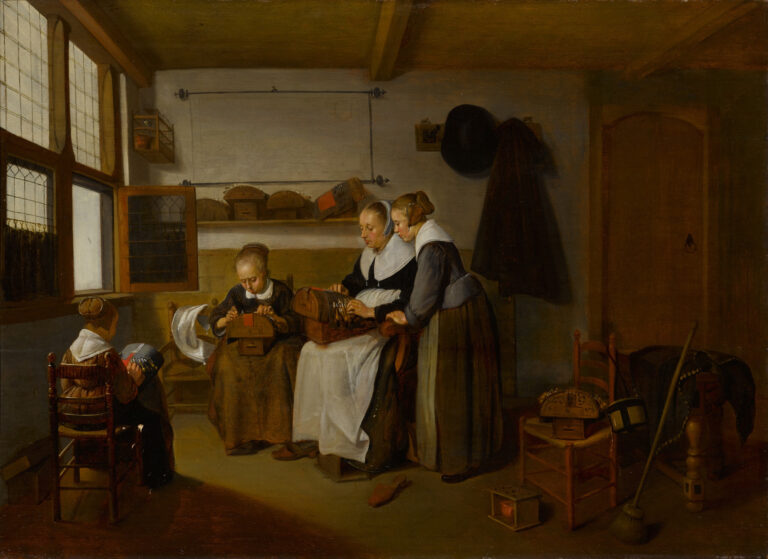
Another painting, by Quiringh van Brekelenkam (after 1622-after 1669), shows a smaller operation: an older woman teaching three girls how to make lace. All women, regardless of social class, were expected to be proficient in the domestic tasks of spinning, sewing, and embroidery. This training could also extend to lacemaking, which was a much more complex process. The girls here might have used their skills for their own purposes, for supplemental income, or as domestic workers in wealthy homes.
On Their Own Terms
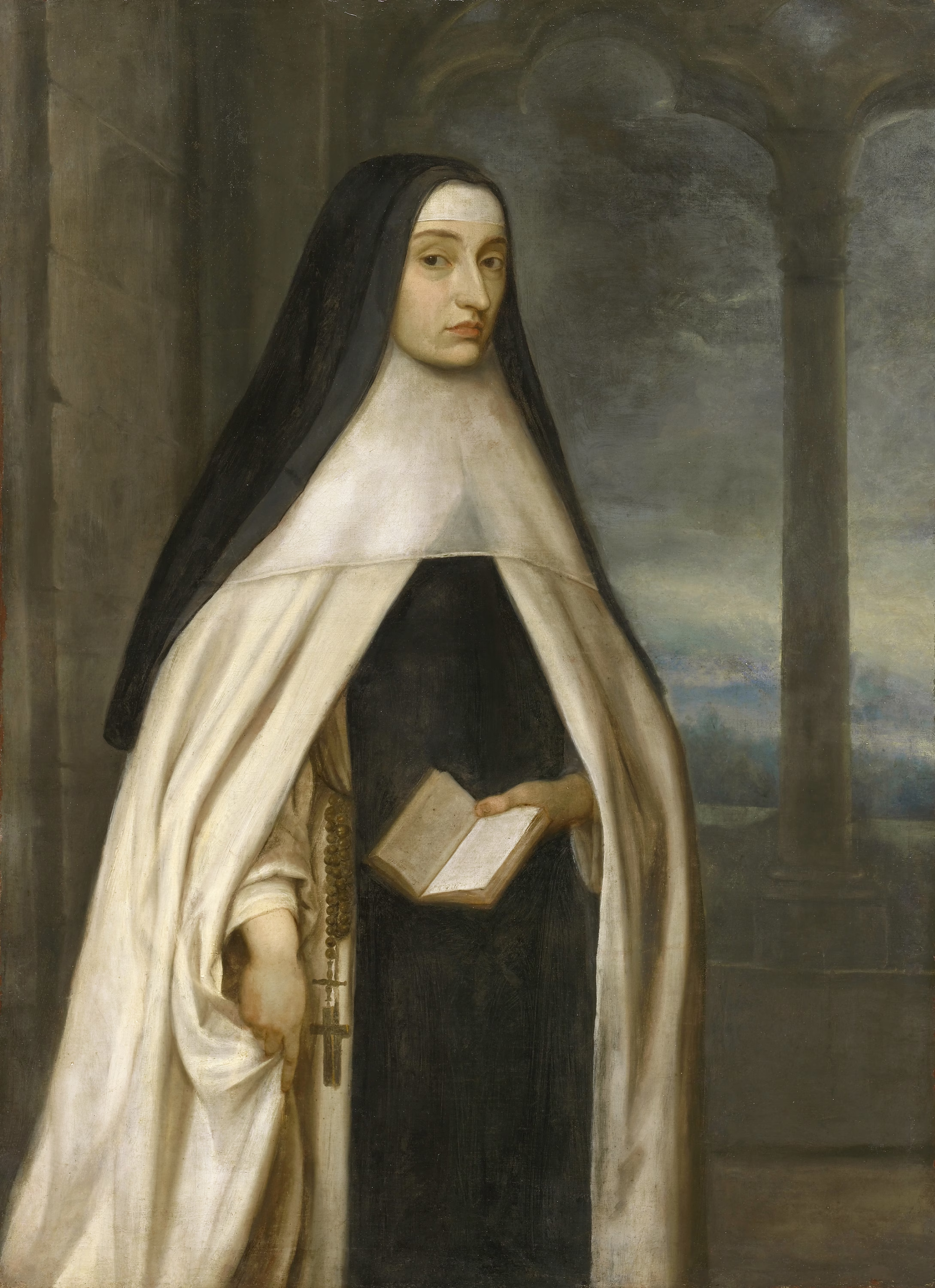
Upper-class women had access to a wider array of training opportunities. For instance, Louise Hollandine, Princess of the Palatinate (1622-1709), studied painting with one of the most renowned teachers of the day, Gerard van Honthorst (1592-1656). She left her courtly life in The Hague in 1657 and went to France, where she converted to Catholicism and became prioress of Maubuisson Abbey in 1664. She continued to paint there, as she, like many other women, found more freedom to pursue her art within a convent, without the demands that marriage and motherhood might have brought.
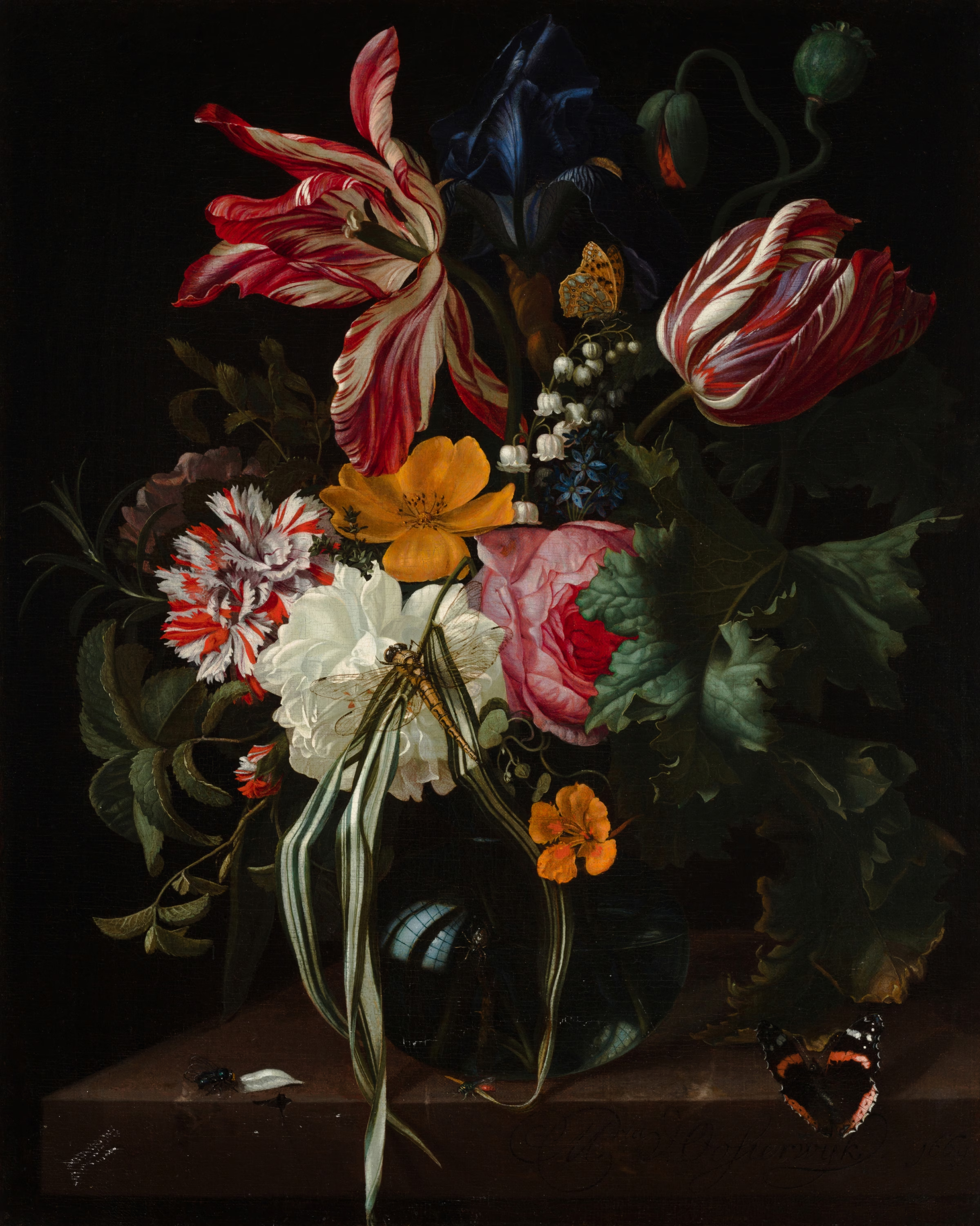
Maria van Oosterwijck (1630-1693), who remained unmarried throughout her life, was trained and supported by a strong family network. Van Oosterwijck’s father, who was not an artist himself, but a minister, encouraged her talent for painting. Through extended family, she was in contact with other artists, and she apprenticed with still-life painter Jan Davidsz de Heem (1606-1684) in Utrecht before moving to Amsterdam. There, Van Oosterwijck lived and worked as a respected and sought-after painter.
Lasting Legacies
Taken together, these examples underscore the structural limitations placed on women, as well as the opportunities, and the resourcefulness with which they navigated them. Each left a legacy of artistic labor that was diverse, resilient, and deeply embedded in the social fabric of their time.
Want to learn more? Visit Women Artists from Antwerp to Amsterdam, 1600-1750, through January 11, 2026, and buy the exhibition catalogue from NMWA’s museum shop.