

Pacita Abad
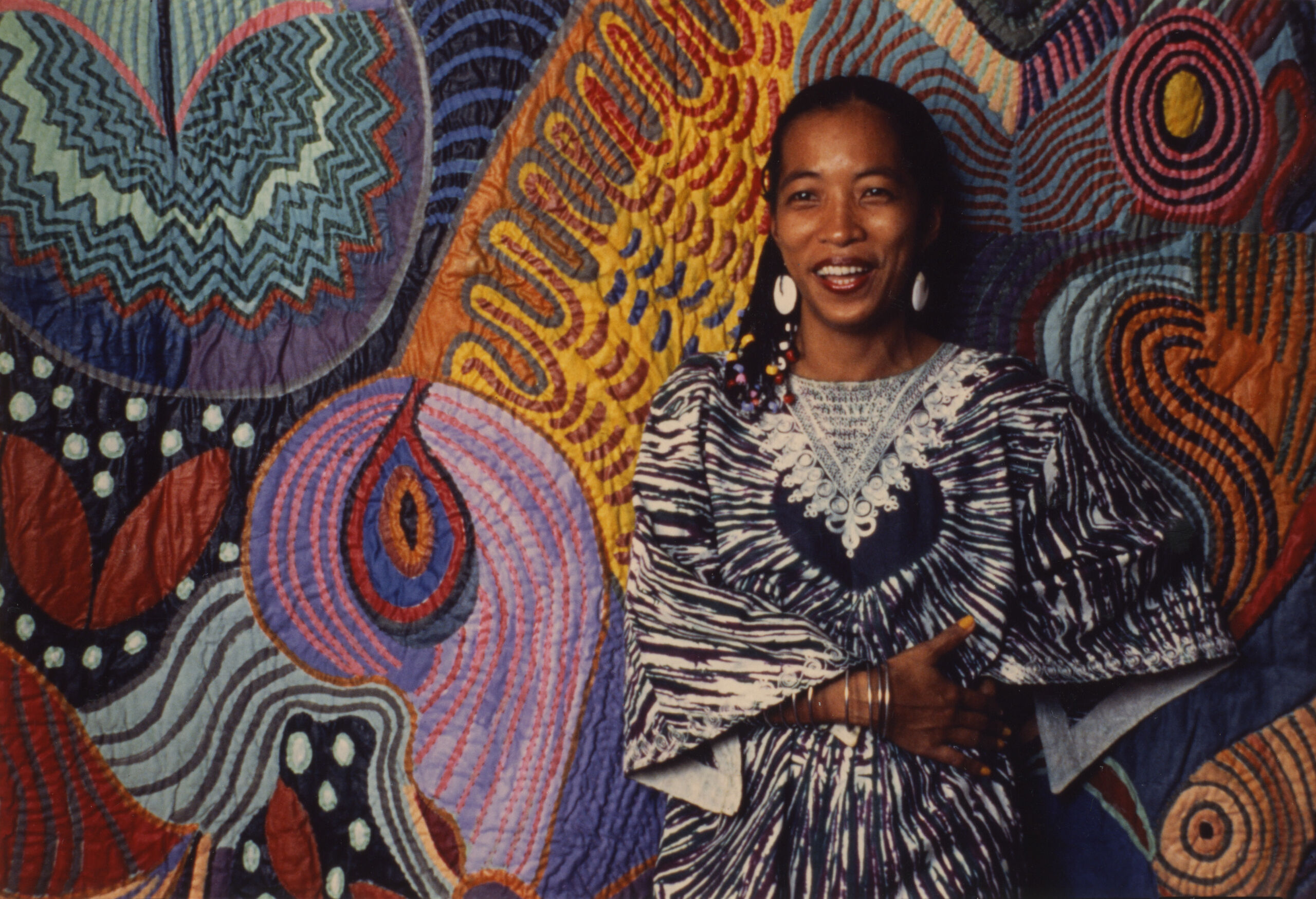
Pacita Abad, Courtesy of Pacita Abad Art Estate, Photo by Paul Tañedo
Pacita Abad used her colorful, multimedia artworks to highlight the legacies of Western colonialism and the experiences of political and economic refugees. “I have always believed that an artist has a special obligation to remind society of its social responsibility,” she said.
Abad’s upbringing in the Philippines inspired her political activism. Before beginning her artistic career, Abad attended law school in Manila with the aim of becoming a public servant. Forced to flee in 1970 after she organized a nationwide student protest against authoritarian president Ferdinand Marcos, Abad relocated to the United States and earned an MA in South Asian art history from Lone Mountain College (now part of the University of San Francisco). Later, she studied painting at the Corcoran School of Art in Washington, DC, and the Art Students League in New York.
Abad spent most of her life traveling, painting, and studying artistic traditions. By the time of her death in 2004, she had lived and worked in more than 50 countries around the globe. Each move offered an opportunity to enrich her practice. Abad is best known for her “trapunto paintings”: These immense artworks, some measuring 20 feet in length, are loosely based on Italian quilting (trapunto). She used textile techniques on these canvases, stuffing and stitching them as well as embellishing them with paint, beads, buttons, and glass. Her works draw on the Western figurative tradition of history painting through allegorical references to contemporary political events.
