

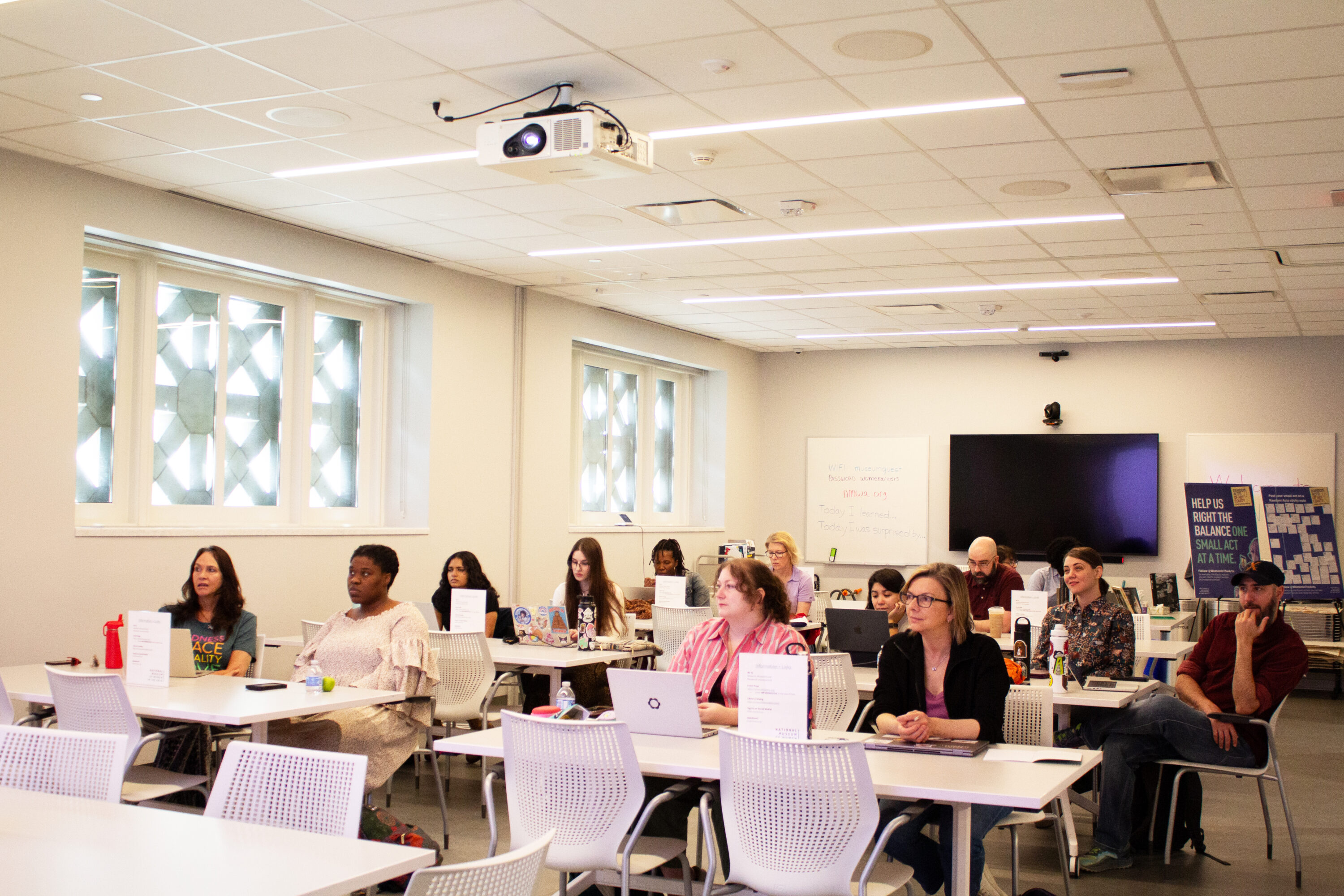
Inspired by the NMWA exhibition Ruth Orkin: Women on the Move (December 12, 2025–April 19, 2026), the museum’s Betty Boyd Dettre Library and Research Center dedicated its annual Wikipedia Edit-a-Thon, in partnership with Wikimedia DC, to women and nonbinary photojournalists. Volunteer editors gathered at the museum on March 22, 2026, to create and improve Wikipedia entries of intrepid, inspiring, and underrepresented, photojournalists.
Why Wikipedia Editing Matters
Creating Wikipedia entries is vital: as one of the internet’s largest information sources, Wikipedia hosts more than 66 million articles in 342 languages and receives approximately 508 million views each day. Yet as a volunteer-driven platform, it reflects persistent biases. The Wikimedia Foundation notes that as of 2021, “only 18.13% of content in all Wikimedia projects, including biographies on Wikipedia, are about women. On English Wikipedia specifically, 19.04% of biographies are about women.” Although editing is accessible to all, contributors are about 87% male. Because Wikipedia content depends on who participates, this gender imbalance has contributed to the absence of entries about notable women.
Addressing Bias Through Collective Action
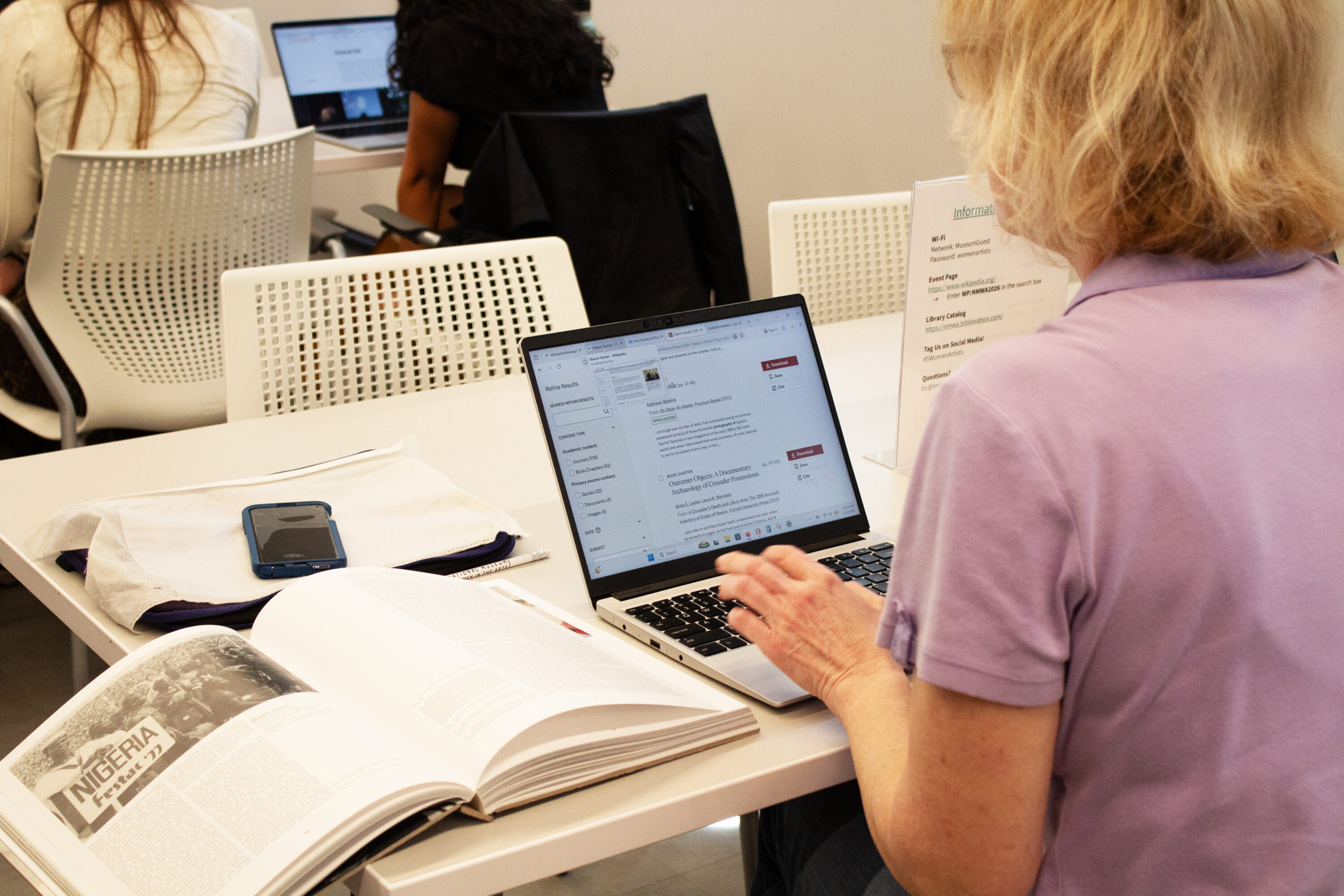
Events like this play a critical role in fighting inherent biases in publicly shared information. To establish a Wikipedia article, a subject must be supported by at least two (preferably three) reliable secondary sources. The more sources available, the stronger the case for inclusion. But because the lives and work of some women photojournalists have not been well documented, establishing that notability can be especially challenging. By bringing people together and providing access to museum resources—books, archival materials, and staff expertise—these annual Edit-a-Thons help to verify the notability of overlooked women artists. This year, volunteers added 16 new entries for photojournalists including Jodie Steck (1951–2024), Rosem Morton, and Adriana Loureiro Fernández (b. 1988).
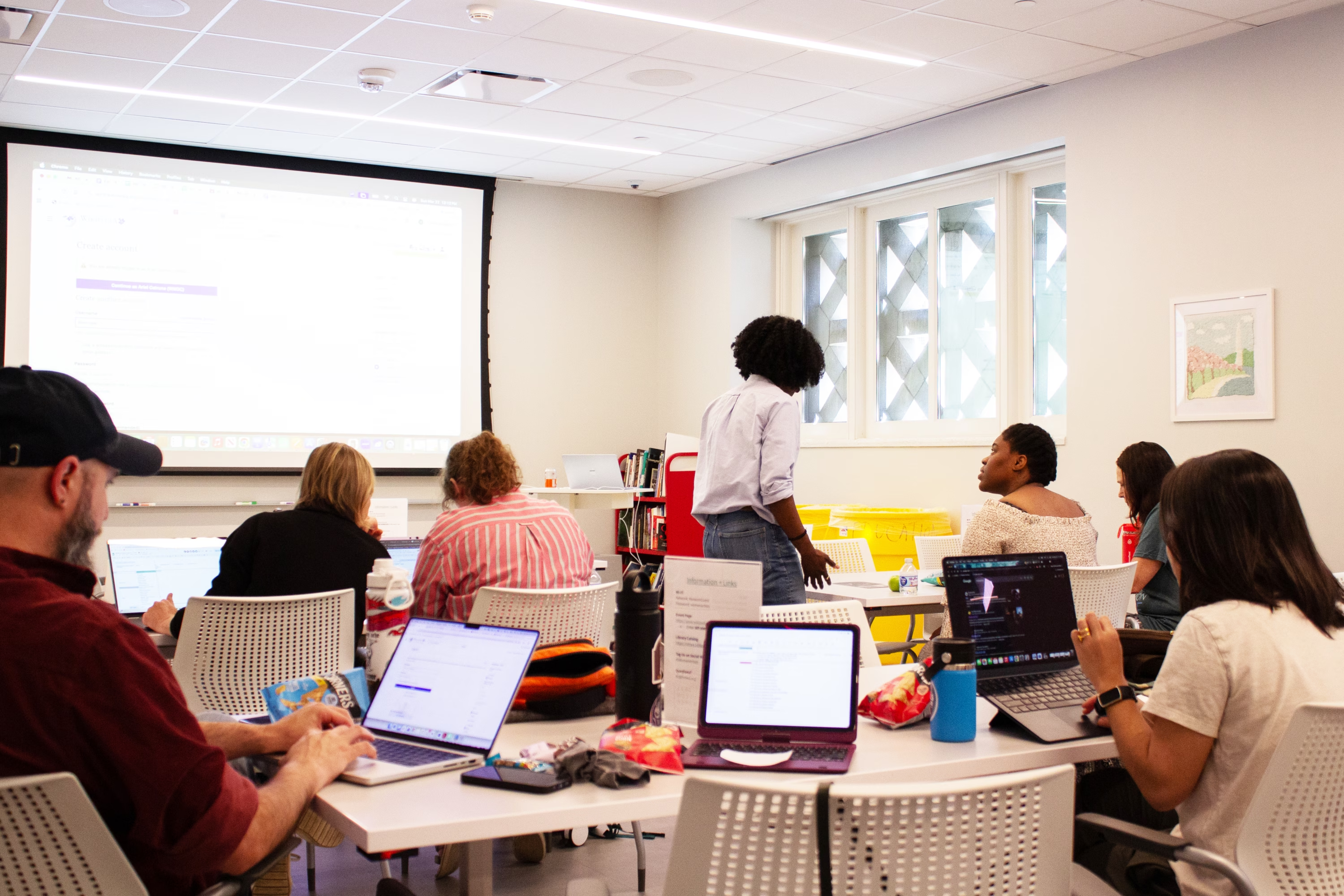
These events also provide a space for participants to learn the skills of editing Wikipedia. As many attendees were first-time editors, they learned together, building connections as they searched for sources and shared information about the women they were documenting. They edited 23 articles in total, bolstering entries for photojournalists including Sharon Farmer (b. 1951) and Charlotte Brooks (1918–2014). Overall, volunteers added more than 4,300 words and 72 new references. Since the event, the articles collectively have been viewed more than 17,000 times, shining a light on this overlooked demographic.