

In 1985, two years before NMWA opened to the public, the news of the creation of a museum of art by women fired artists’ interest worldwide. They sent letters, slides, and photographs offering art for the future museum.
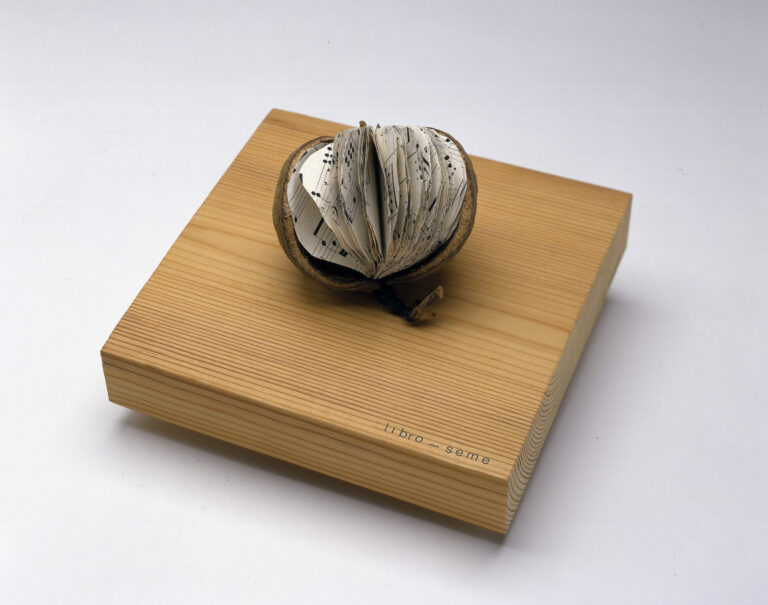
At the time, I worked in the art library of museum founders Wallace and Wilhelmina Cole Holladay, making records and providing reference information on women artists. There was no curatorial staff then, so Mrs. Holladay and I read and responded to artists’ correspondence. Among those who wrote to us were two Italians, Mirella Bentivoglio (1922 to 2017) and Elisabetta Gut (1934 to 2024). We selected Libro-seme (Seed Book) (1983) by Gut and To Malherbe (1975) by Bentivoglio for the collection. This began NMWA’s distinctive collection of artists’ books, which today includes more than 1,000 works by artists from around the world.
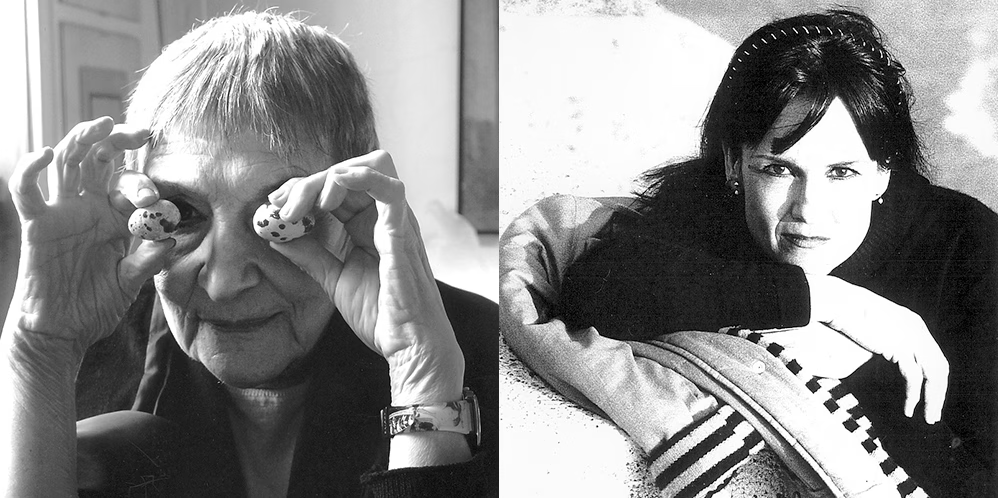
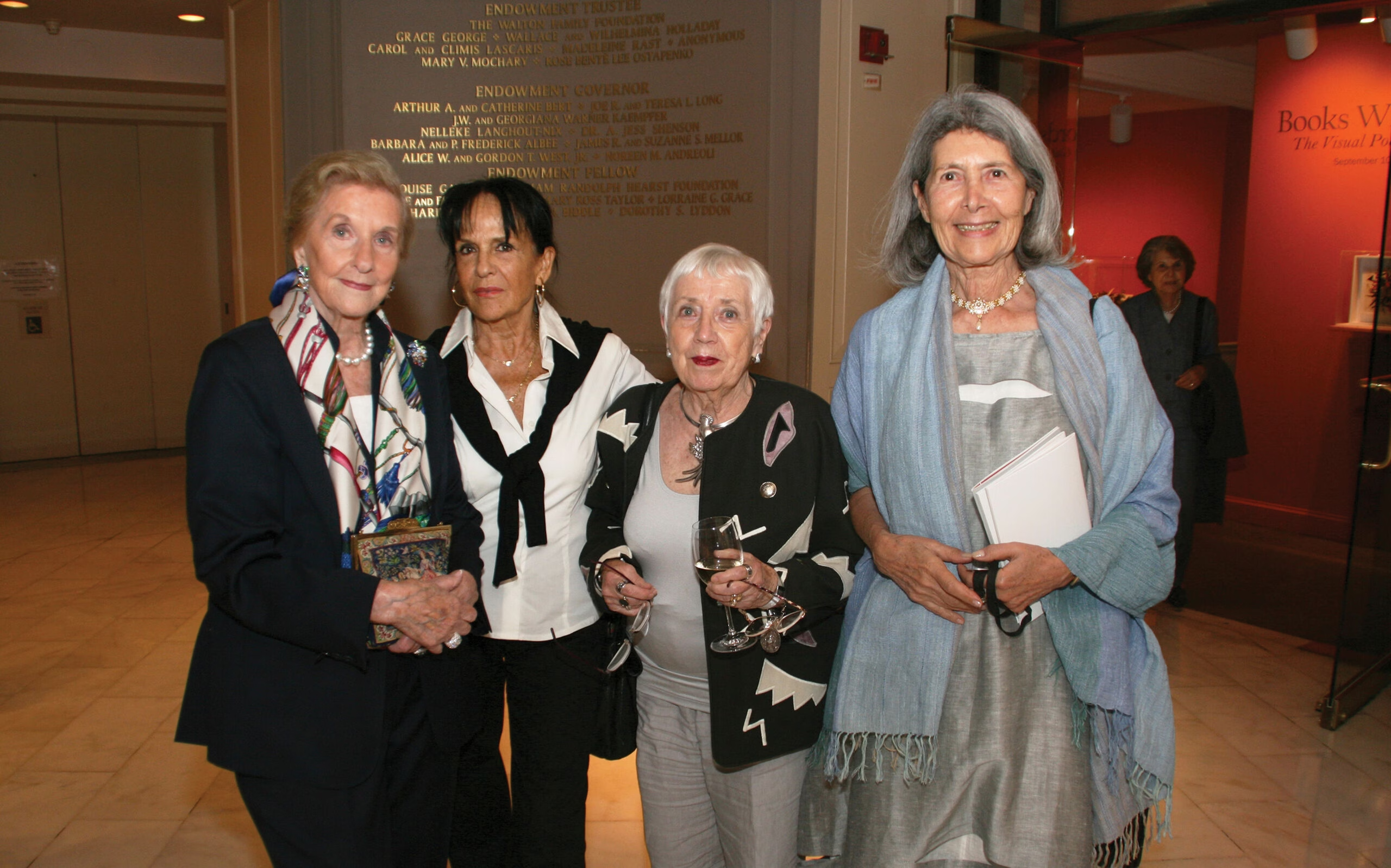
As the museum prepares for the upcoming exhibition Women to Watch 2027: A Book Arts Revolution, opening in April 2027, it is a fitting time to remember Bentivoglio and Gut. Both artists donated additional works to NMWA, and I eventually curated solo exhibitions for each of them at the museum: The Visual Poetry of Mirella Bentivoglio (1999) and Books Without Words: The Visual Poetry of Elisabetta Gut (2010). During preparations for their exhibitions, I went to Rome to work with the artists and got to know them as friends.
Both Bentivoglio and Gut worked in many mediums. Bentivoglio was a poet, an art critic, a curator, a performance artist, a sculptor, and a feminist art activist. But her main contribution was in visual poetry (poesia visiva). She explored the interplay between language and image using photomontage and collage. She also created unique book objects (libri-oggetti), carving some in stone and wood. She told me that she chose these durable materials to protect them from damage, a concern after she participated in book-saving efforts during a devastating flood in Florence in 1966.
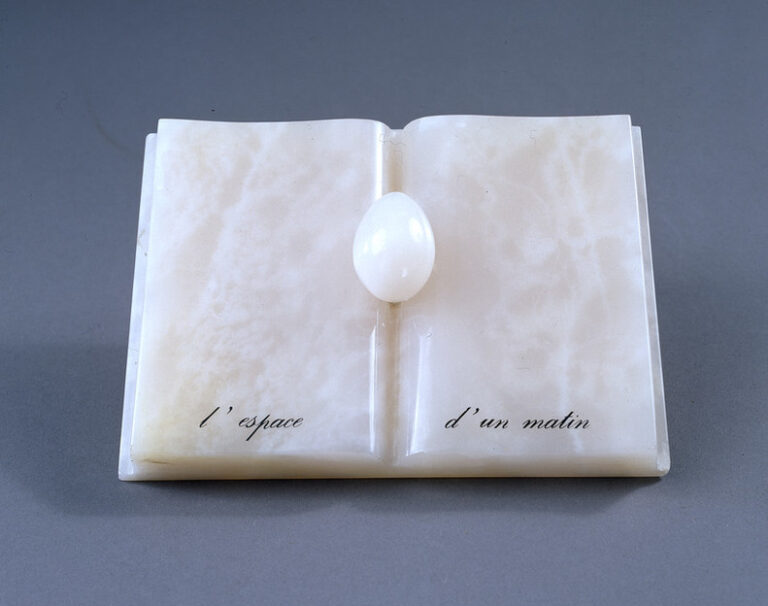
Her works were often inspired by images of eggs or trees. She explained that she saw an egg as a symbol of equality of sexes, because one cannot know if an egg contains a male or female. She made a large public sculpture, The Egg of Gubbio (1976), for the town of Gubbio in Umbria. The tree she saw as a symbol of growth, representing connection to earth and nature.
Gut was initially a successful painter. She also worked as a stage and costume designer and codirected films, but she maintained that these art forms did not allow her to fully express herself. She found her niche in book arts. She was a voracious reader and celebrated her favorite writers and composers by dedicating works to them. Her three-dimensional paper book-structures, reaching into the viewer’s space, evoked a rapturous response.
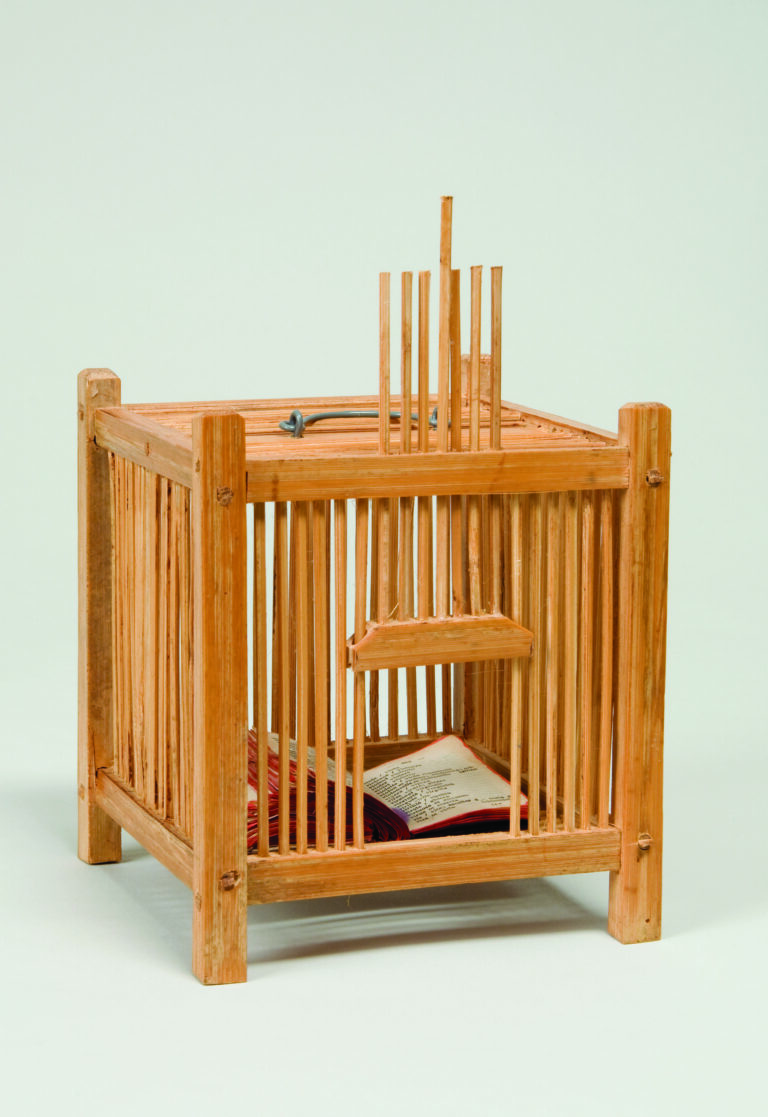
Gut liked to express her ideas though metaphors. Libro ingabbiato (Book in a Cage) (1981), a tiny dictionary locked in a cage, is a cry for freedom of expression. In Volo-volume (Flight-volume) (1980), a black bird flies across a dark sky, representing the artist’s sadness after the death of a loved one.
Bentivoglio’s interests were more universal, including protection of the environment and women’s representation in the arts. She curated the first-ever group exhibition of artists’ books and visual poetry by women for the Venice Biennale in 1978.
Bentivoglio occasionally took me sightseeing, and we would go to Via Margutta, where artists and artisans had their workshops. We both loved William Wyler’s movie Roman Holiday (1953), and it was on Via Margutta where Gregory Peck’s character fell in love with the visiting princess played by Audrey Hepburn. We followed the actors’ route to the Bocca della Verita (The Mouth of Truth), a marble mask that according to legend bites off the hand of anyone who tells a lie. With Gut, I once went to the Vatican, where we waited in a long line to see the Sistine Chapel.
They both came to Washington for the opening of their exhibitions. They admired the museum, but what appealed to them most was NMWA’s interest in collecting, exhibiting, and promoting artists’ books. An artist’s book, wrote Bentivoglio in an essay for Gut’s exhibition catalogue, “is first and foremost a symbol of communication and shared knowledge, proof that writing refuses to pass through the portal of death.” The validation of this statement is our unending enchantment with the work of both artists.