

Art Is For Everyone. Help Make Access Possible.

Keep art accessible and women artists visible. Make your gift by June 30 and help us finish our fiscal year strong.    

A woman with light colored skin, wearing a black top and white pants, talks to a group of people in a gallery room. She stands in front of a large, painted portrait of a woman in a high-collared red dress.
National Museum of Women in the Arts

5 Fast Facts: Female Figures

Blog Category:  5 Fast Facts
In front of a stormy ocean, a woman with light skin and blonde, wind-blown hair stands with head turned in profile and eyes closed.

Impress your friends with five fast facts about NMWA collection artists who celebrate the power, beauty, and complexity of the female body.
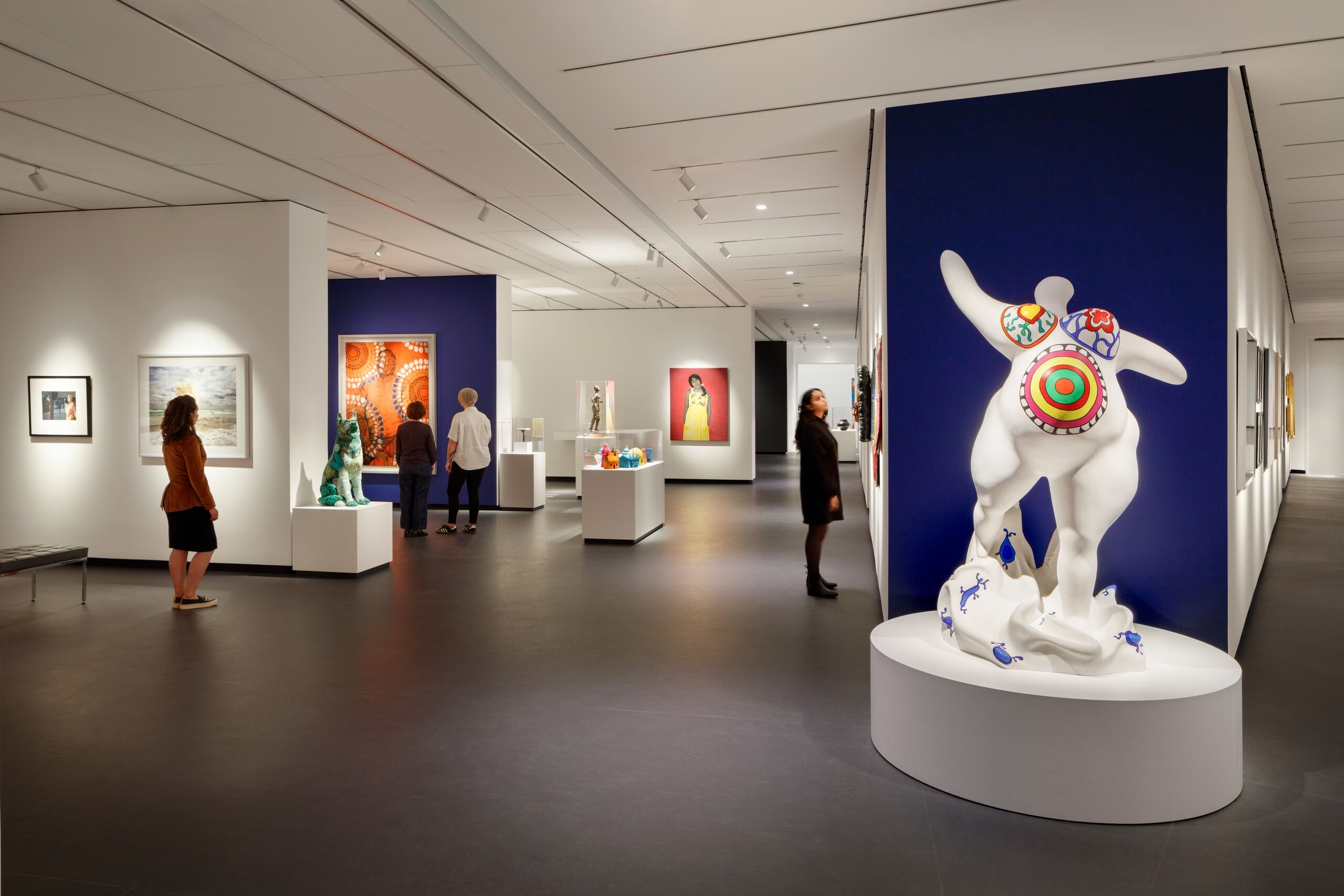
A jubilant sculpture of a pregnant woman with colorful markings on her breasts and stomach anchors a large museum gallery in which various people stand around looking at art on the walls.
Niki de Saint Phalle, Pregnant Nana (right), 1995; Painted marble, 61 x 39 x 33 in.; National Museum of Women in the Arts, Gift from the Trustees of the Corcoran Gallery of Art (Gift of Jeffrey H. Loria); © Niki Charitable Art Foundation/Artists Rights Society (ARS), New York/ADAGP, Paris; Photo by Jennifer Hughes

1. Niki de Saint Phalle

French American artist Niki de Saint Phalle (1930–2002) was inspired by her pregnant friend Clarice Rivers to create her “Nanas,” curvy, joyful figures that honor women’s bodies. Pregnant Nana (1993) embodies an exuberant feminist spirit, highlighted in voluptuous curves, a dance-like position, and lively colors. It is also reminiscent of fertility goddess sculptures made by ancient cultures.
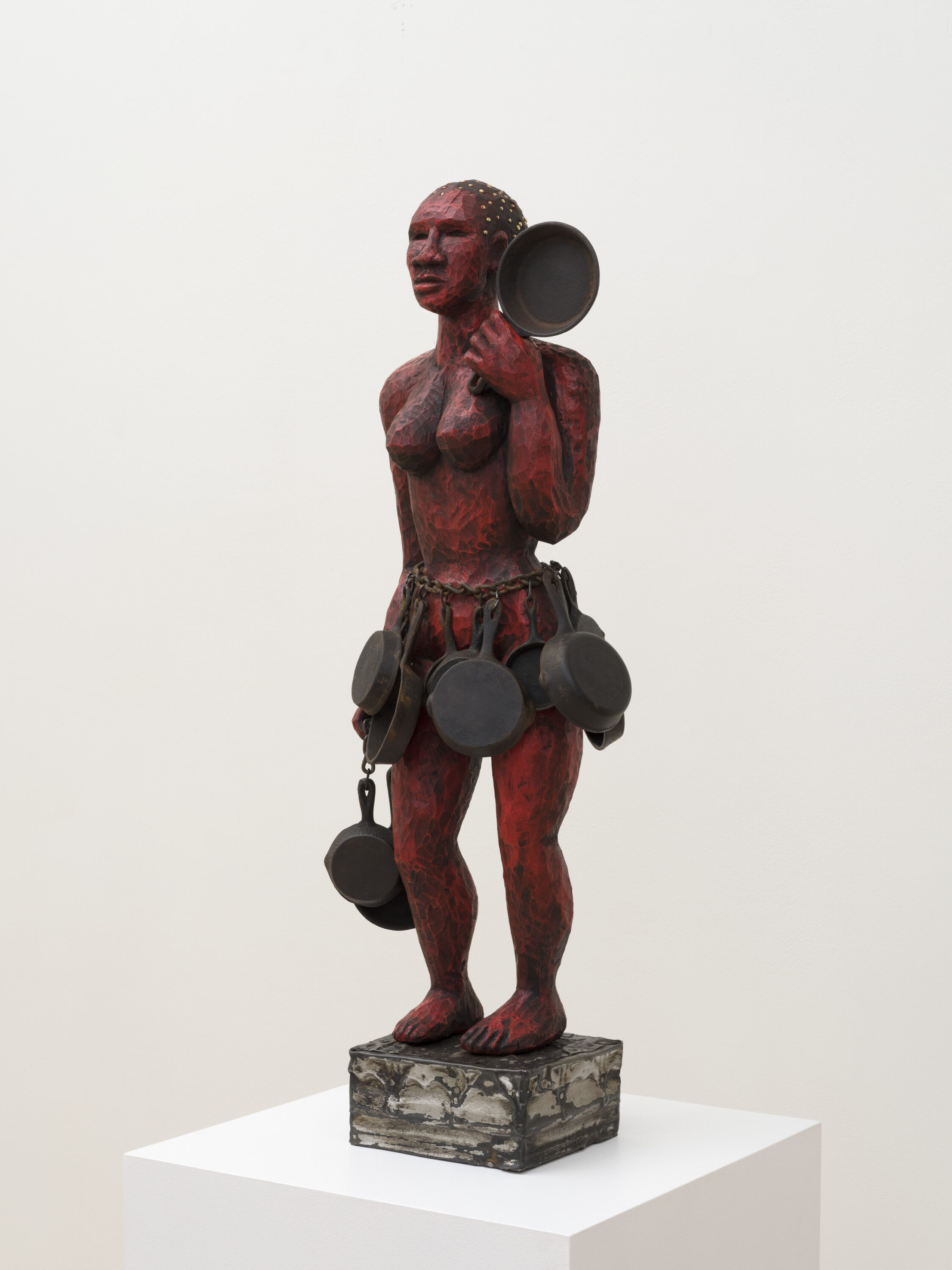
A wooden sculpture is painted red and shaped as a nude woman holding a cast iron skillet in her left hand. She has a heavy chain around her waist with multiple skillets hanging from it like a skirt. She stands on a small wooden platform.
Alison Saar, Scorch Song, 2022; Wood, found mini skillets, nails, and tar, 34 x 11 x 9 in.; National Museum of Women in the Arts; Museum purchase: Funds provided by Steven Scott, Baltimore, in honor of the artist and the 35th Anniversary of the National Museum of Women in the Arts; © Alison Saar; Courtesy of L.A. Louver, Venice, CA; Photo by Jeff McLane

2. Alison Saar

Alison Saar (b. 1956) describes the female body as an “incredible machine” that can endure much to sustain itself and others. The cast iron skillets in Scorch Song (2022) allude to the subject’s role as a nurturer and provider. Yet the figure stands unsmiling and tall, a testament to the burdens and strength she holds.
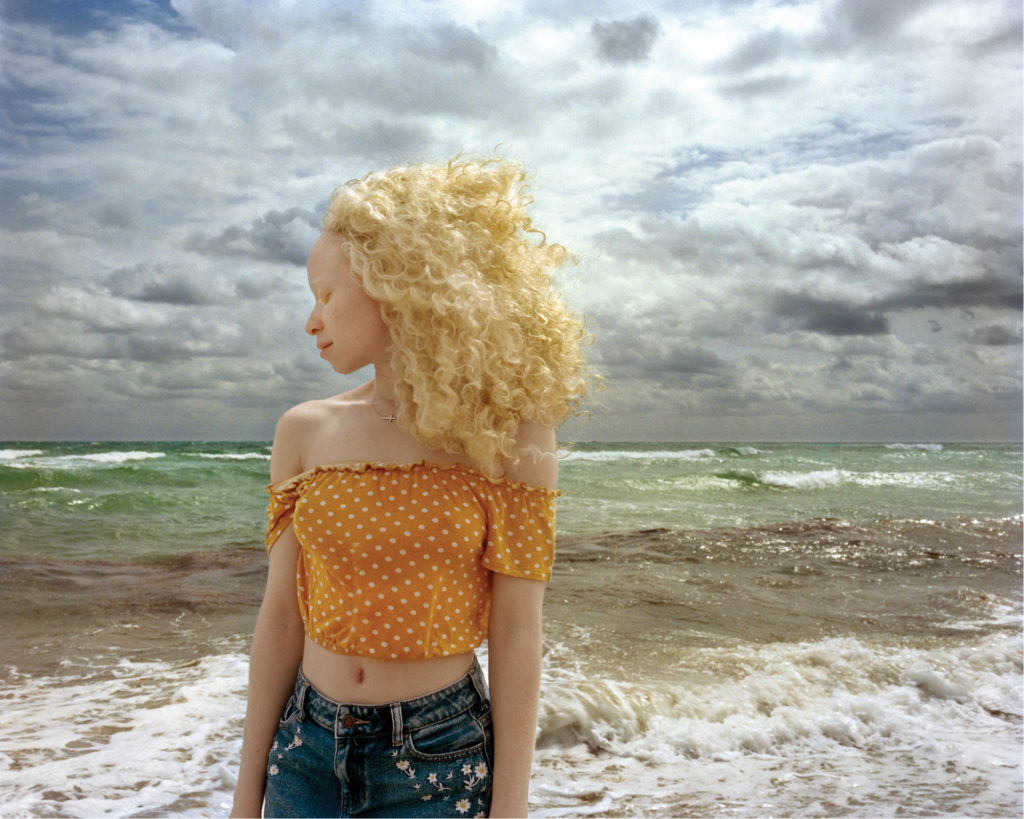
In front of a stormy ocean, a woman with light skin and blonde, wind-blown hair stands with head turned in profile and eyes closed.
Rania Matar, Rayven, Miami Beach, Florida, from the series “SHE,” 2019; Archival pigment print, 37 x 44 in.; Courtesy of the artist and Robert Klein Gallery; © Rania Matar

3. Rania Matar

Rania Matar (b. 1964) was born and raised in Lebanon, later moving to the U.S. in 1984. Her multicultural experience led her to a photography career in which she explores individual and collective identity. In her “SHE” series, Matar captures these narratives by photographing young women in both the U.S. and the Middle East in dramatic environments outside the familiarity of their homes.
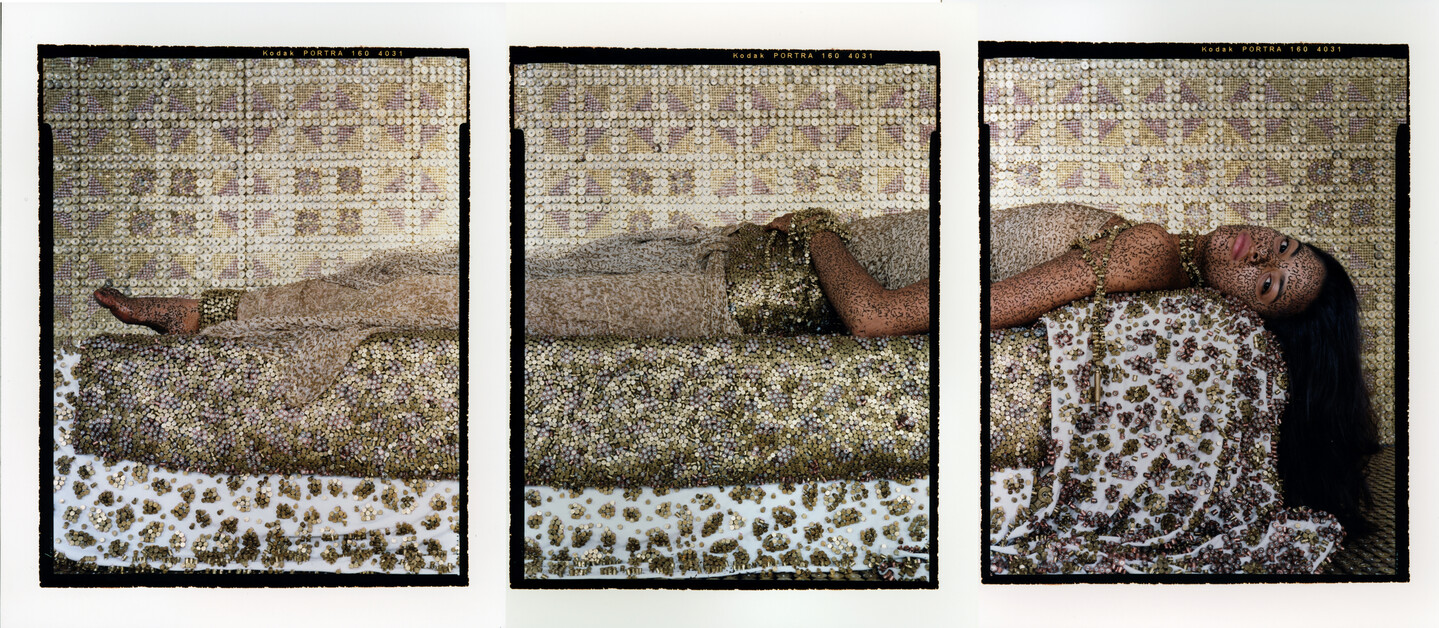
Three photographs join to show a woman lying on a bed on her back. Turning her head to look at the viewer, she wears airy light clothing and a heavy, wide gold belt and her long hair falls to the floor. A metallic surface covers everything - the walls, furniture and the woman.
Lalla Essaydi, Bullets Revisited #3, 2012; Three chromogenic prints mounted on aluminum, 66 x 150 in. overall; National Museum of Women in the Arts, Purchased with funds provided by Jacqueline Badger Mars, Sunny Scully Alsup and William Alsup, Mr. Sharad Tak and Mrs. Mahinder Tak, Marcia and Frank Carlucci, and Nancy Nelson Stevenson; © Lalla Essaydi

4. Lalla Essaydi

Moroccan artist Lalla Essaydi (b. 1956) challenges the representation of women in 19th Century Orientalist paintings, in which women from the East were exoticized for European viewers. Bullets Revisited #3 (2012) recalls a seductive female nude, but Essaydi’s subject is dressed, her clothing adorned in polished bullet casings, and she looks directly at the viewer. Here Essaydi also comments on the physical violence women experienced during the Arab Spring.
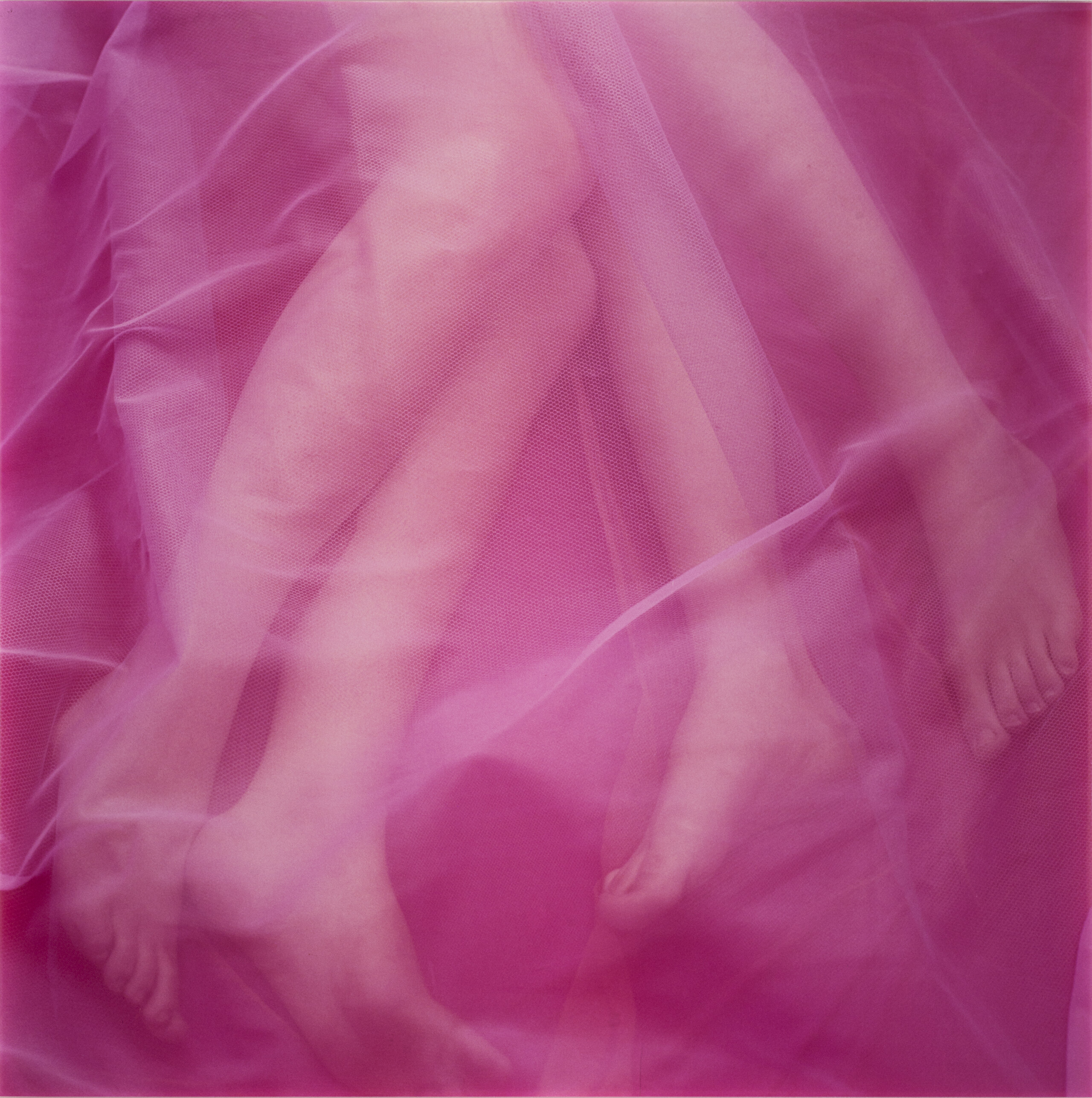
A photograph of two light-skinned figures lying on a bed turned towards each other with their legs touching. A sheet of gauzy pink tulle is draped over them. All we can see of these two figures are their legs from their knees to their feet.
Deborah Paauwe, Night Swimming, 2002; Chromogenic color print, 47 1/4 x 47 1/4 in.; National Museum of Women in the Arts, Gift of Heather and Tony Podesta Collection; © Copyright Agency; Licensed by Artists Rights Society (ARS), New York; Photo by Lee Stalsworth

5. Deborah Paauwe

Deborah Paauwe (b. 1972) describes her works as “purely autobiographical,” exploring the tensions between childhood and womanhood. Night Swimming (2002) illustrates this blurred transition; the gauzy, hot pink tulle evokes a sense of child-like play and offers some protection from sight, yet the tangle of legs underneath insinuates a sexual coming-of-age.

Related Posts