
In 2026, the National Museum of Women in the Arts (NMWA) celebrates the 10-year anniversary of #5WomenArtists. This viral social media campaign was inspired by a simple question that the museum’s founder, Wilhelmina Cole Holladay, started asking back in the 1970s: Can you name five women artists? Over the past decade, NMWA has invited institutions and individuals to join in sharing the stories of women artists, to challenge inequalities in the art world, and to urge people to consider who is represented and remembered.
While #5WomenArtists began on social media, its impact extends beyond digital platforms and into lasting conversations, collaborations, and practices within cultural institutions. As #5WomenArtists turns 10, let’s revisit some highlights and consider how its message continues to shape the work ahead.
Global Collaborations
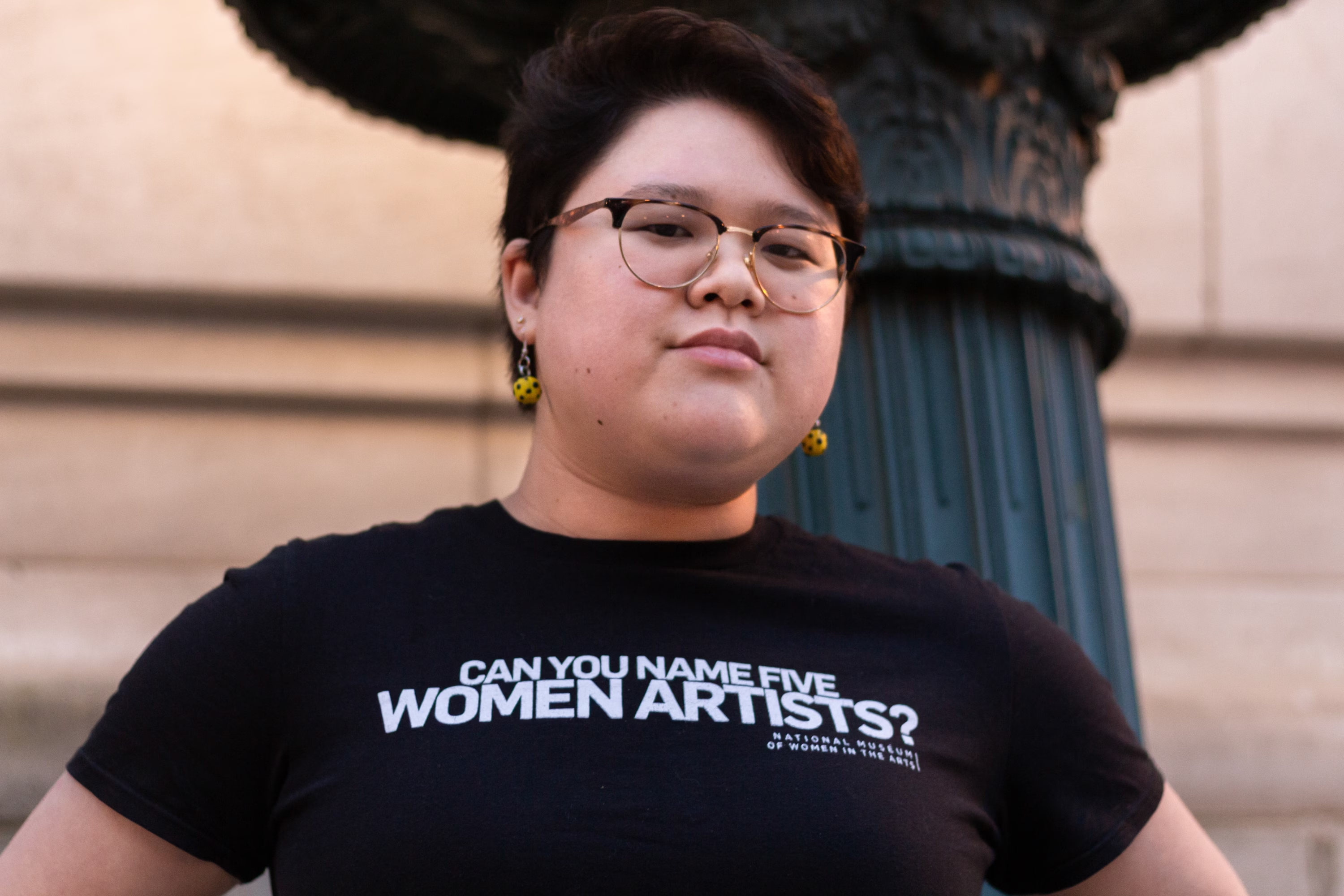
Using the hashtag #5WomenArtists, museums, galleries, and individuals around the world began to share names, stories, and resources. Museums pledged to increase their collections of women and nonbinary artists, hosted events highlighting the achievements of women artists, and shared their stories on social media, reaching 61 million users. What started in Washington, D.C., quickly grew into a global movement with more than 1,800 participating cultural organizations across the country and internationally, including museums such as Tate (United Kingdom), the Whitney Museum (New York City), the Uffizi Gallery (Italy), the National Gallery of Australia, the Guggenheim Museum Bilbao (Spain), and many more.
Knowledge Is Power
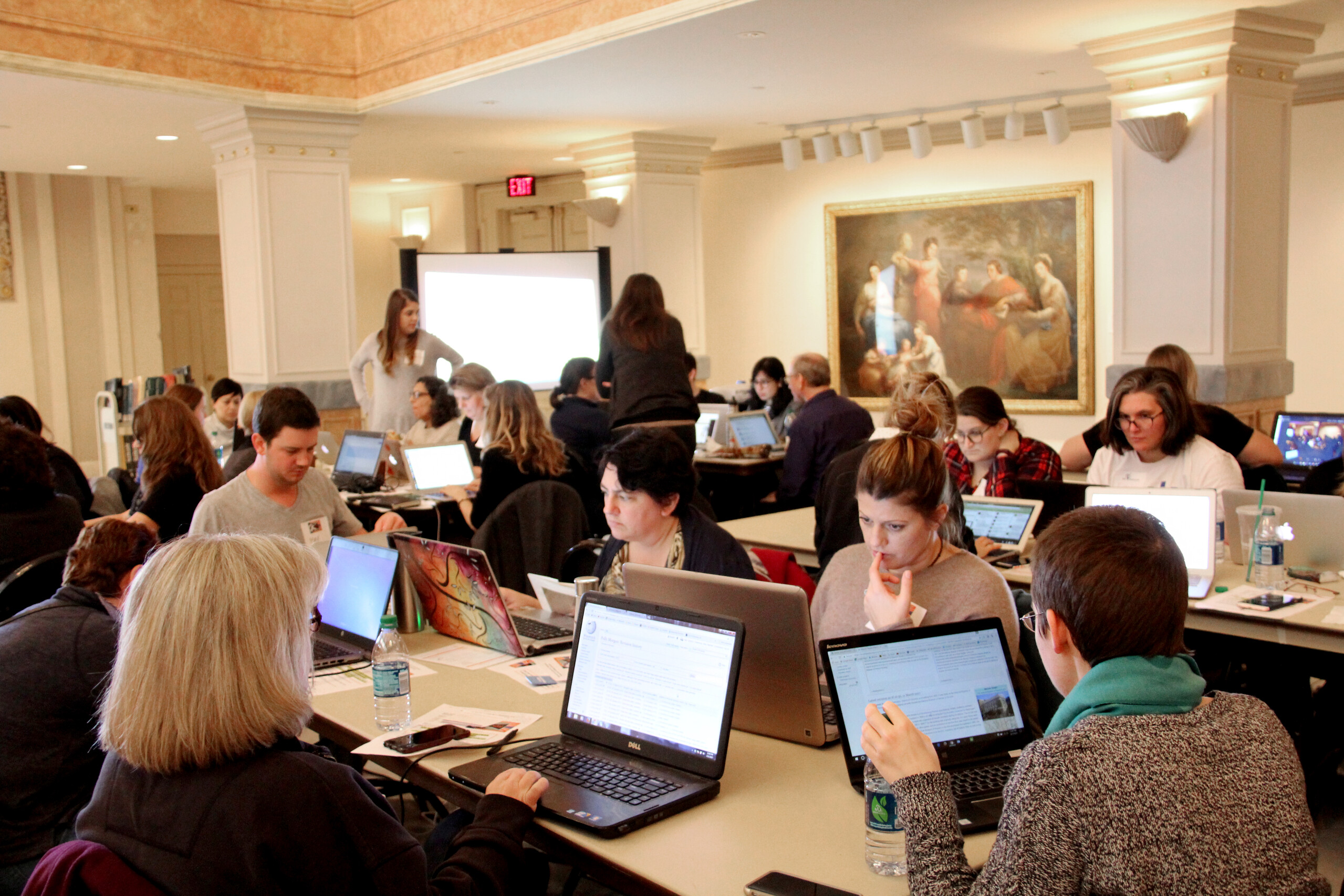
#5WomenArtists also asks: Who decides whose work is included in archives, books, and institutions? Why have we not heard of many of the world’s great women artists? To address this question, NMWA has made efforts beyond the digital sphere to educate people and rewrite the canon. One of those efforts is the annual Wikipedia edit-a-thon, bringing together researchers, students, and community members to add and refine the biographies of women and nonbinary artists. The Wikipedia edit-a-thons are part of a global initiative, and over the past 10 years participants at NMWA have contributed and edited hundreds of entries. For example, the 2024 edit-a-thon focused on disability activism and advocacy, and attendees added entries for artists Sarah Biffen (1784 to 1850), Mariam Paré (b. 1975), Ángela de la Cruz (b. 1965), Judith Scott (1943 to 2005), and Jaklin Romine (b. 1985).
2026: Looking Ahead
As we celebrate 10 years of #5WomenArtists, the message is as urgent as ever. While women artists have achieved more recognition in museums, galleries, and the art market, there is still work to do. Here are a few ways to participate in 2026:
- Spread the word and take the pledge with friends and family. Post on social media with the hashtag #5WomenArtists and tag us @WomenInTheArts.
- Attend a #5WomenArtists program onsite at the museum such as NMWA Unframed, the 2026 Wikipedia Edit-a-thon, and our themed #5WomenArtists tours.
- Attend a #5WomenArtists program online such as NMWA Advocates: Righting the Balance or our upcoming Art Chats (March 13 and March 27).
- Check out In Your Region to find exhibitions and events near you.
To keep up to date on our 2026 #5WomenArtists offerings, follow NMWA on social media (Instagram, Facebook, TikTok, and YouTube) and check out our related events as we celebrate the campaign’s past achievements and, in collaboration with you, think of new ways to achieve lasting change together.