


Through her trailblazing role in women’s cooperative galleries and her approach to figure painting in the 1960s and ’70s, artist Shirley Gorelick (1924–2000) expressed her powerful feminism. Critics at the time often overlooked realist painters, particularly women, assuming they clung to tradition. Shirley Gorelick: Figuring It Out, on view at NMWA through June 28, 2026, is centered on three major paintings by Gorelick in the museum’s collection and highlights her piercing vision of humankind as well as her varied printmaking and drawing practices.
Remixing the Masters
Born and raised in Brooklyn, Gorelick studied with esteemed American artists of the mid-20th century, including Abstract Expressionists Helen Frankenthaler and Grace Hartigan. This exhibition begins with the moment around 1960 when Gorelick committed to portraying human subjects from life. She first engaged with old and modern masters’ depictions of the female nude, creating boldly drawn and lusciously textured paintings and jewel-like works on paper.
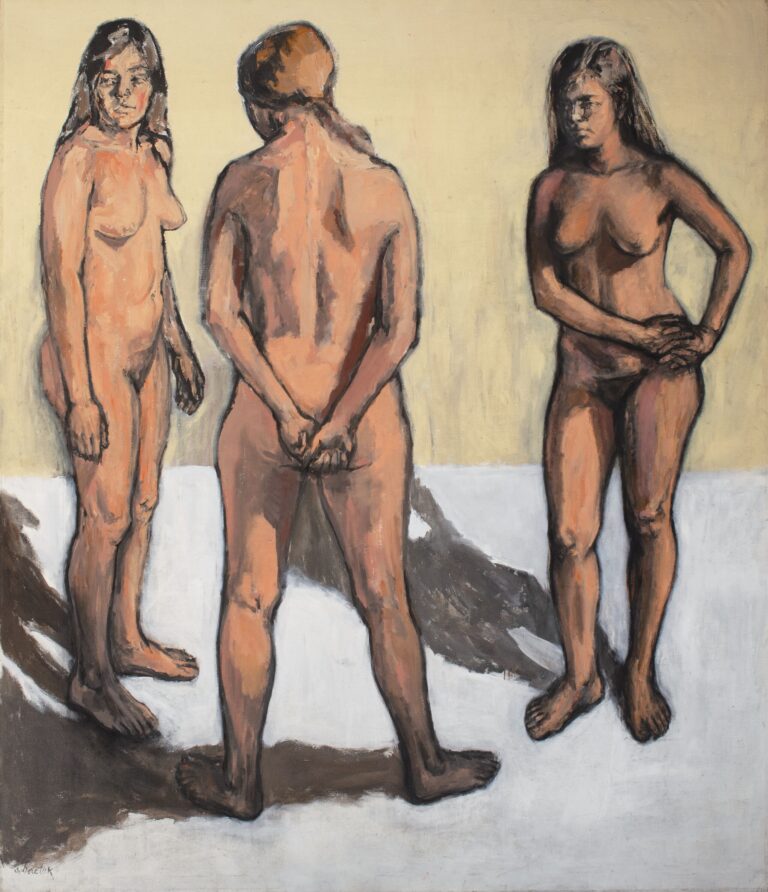
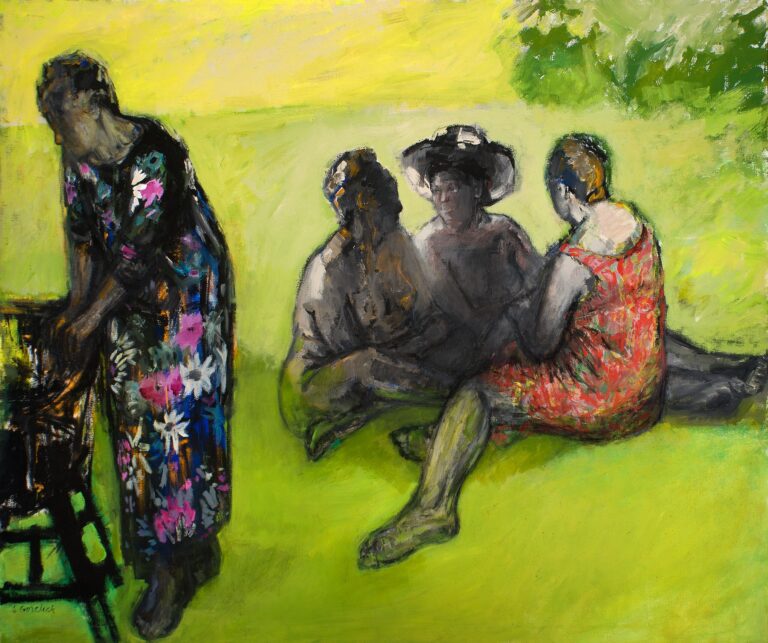
Gorelick’s images of standing female figures, which respond to the “Three Graces” theme in mythology and classical art, differ from historical antecedents. Her figures typically do not touch or interact with one another, and each “Grace” plainly depicts the same model. In Three Graces I (1967) she applied concentrated layers of peach and gray paint to mark the broad shapes of her model’s body and the deep shadows it cast on the floor. The motif formed a rich foundation for Gorelick’s exploration of color, technique, and mood. In her large-scale painting Giorgione’s Meadow (1964–65), Gorelick surrounded a group of four female figures with an impressionistic green background, which she enthusiastically described as “an environment radiating.”
Libby
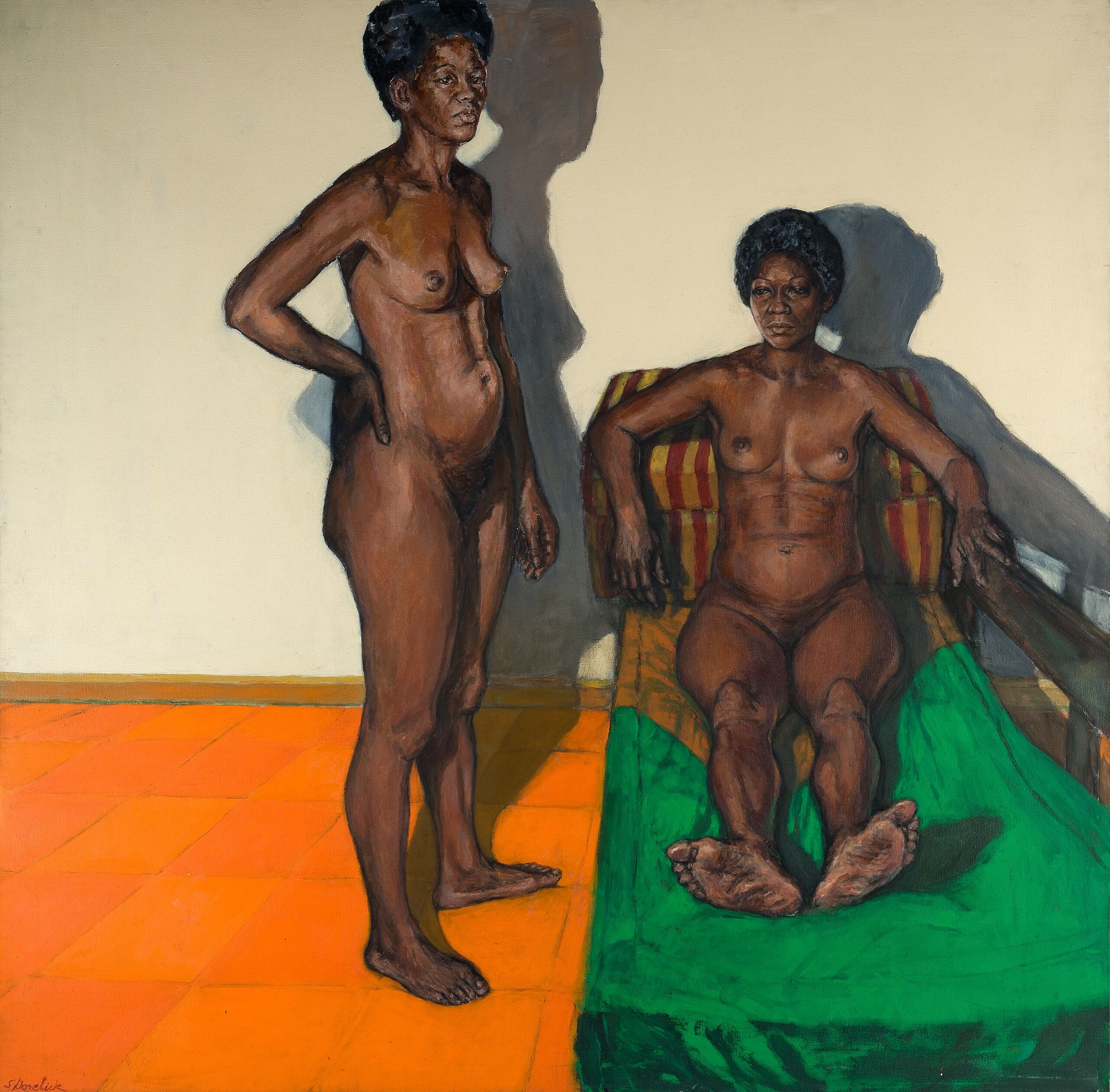
When Gorelick began working with model Libby Ourlicht (1921–1995), the individual spirit of her subjects became the essential focus of her art. Gorelick and Ourlicht knew one another before their artistic partnership, and both were active in progressive politics and social causes, advocating for civil rights, women’s rights, and freedom of sexual identity. Double Libby I (1970) combines the artist’s signature saturated colors, stark shadows, and richly brushed figures. The standing version of Ourlicht, with a hand on her hip, seems to guard the seated figure, whose regal pose against boldly patterned cushions indicates her importance and seriousness.
Circle of Friends
Within the context of the feminist movement, Gorelick helped establish artist-run women’s cooperative galleries. In 1974, she joined SOHO20 Gallery in Manhattan, one of the first spaces in New York City to showcase the work of an all-women-artist membership. As she prepared to open her inaugural presentation at SOHO20, she described her goal of giving her “visually ‘real’ paintings…an intense psychological aura,” and she made new portraits of a friend’s three young adult daughters as well as longtime family friends Lee and Gunny Benson.
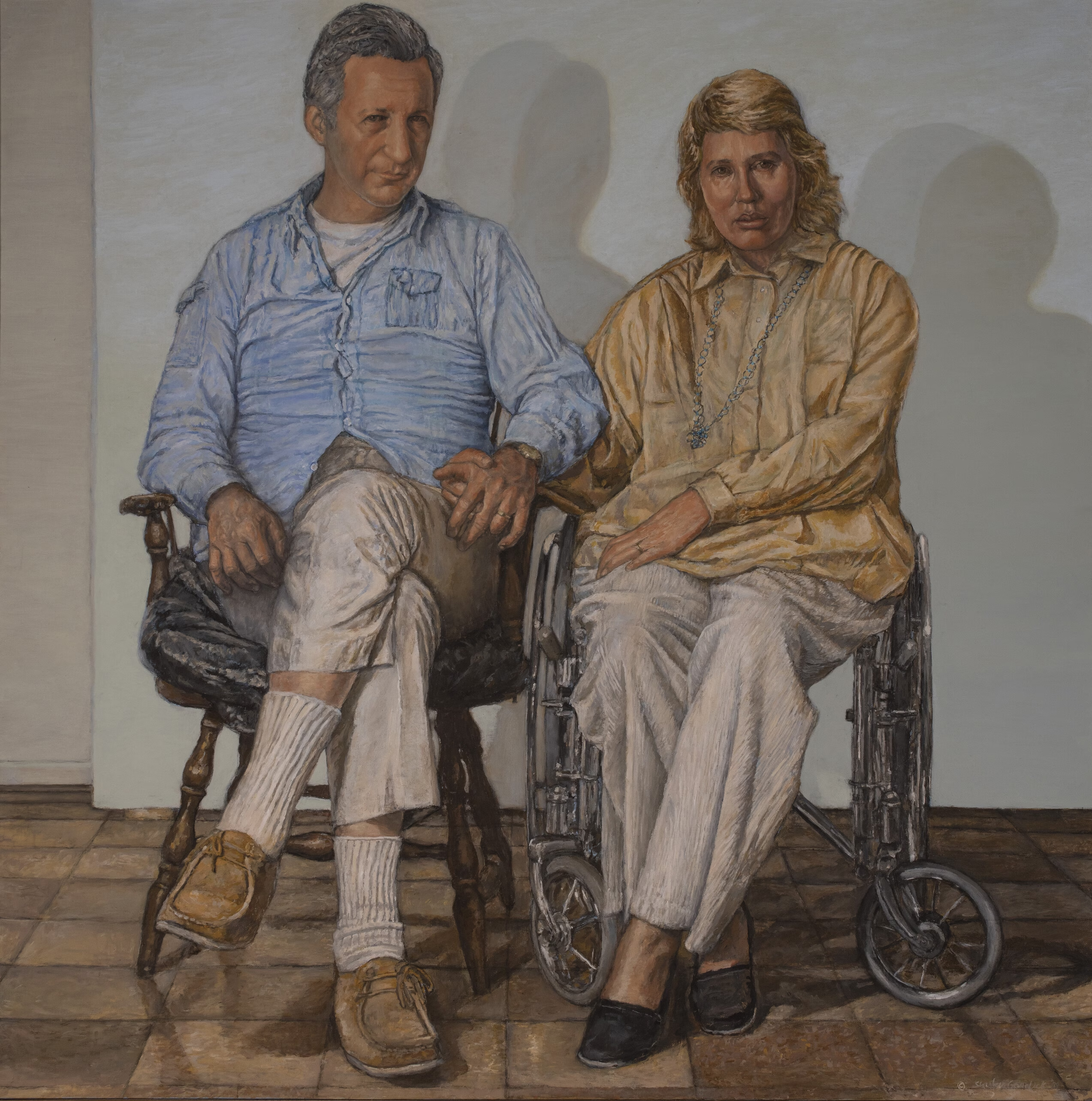
Gorelick’s frank depiction of Gunny Benson’s disability in The Bensons II (1979) had few antecedents in the history of American painting. Embracing more precise brushwork, the artist delineated clear details of surfaces and objects within her composition, including Gunny’s wheelchair, which she used to manage her muscular dystrophy. The open body positions of the couple signal their approachability, but Lee’s tucked chin and Gunny’s lowered brow also suggest fatigue, weariness, or even discomfort. Although figure painting and portraiture are always present in artistic production, many critics in the 1960s and ’70s perceived those practices as tangential to more avant-garde mediums such as video and performance art. A number of contemporary reviewers, however, perceived the depth and intensity of Gorelick’s vision, including John Perreault, who said, “The human content is overwhelming.” The vitality of Shirley Gorelick’s art remains undiminished, and a new history of her place in New York art of the era is emerging.
Visit Shirley Gorelick: Figuring It Out through June 28, 2026, and buy the accompanying catalogue from NMWA’s Museum Shop.