


Routed West: Twentieth-Century African American Quilts in California threads the needle between Black people’s historical movements and their quilts to tell stories of collective care, resilience, and creativity. We spoke with Ora Clay, a featured quilt-maker in the exhibition, about her practice, inspirations and influences, the ways migration and a sense of home shape her artistic perspective, and more.
Visit the exhibition to see Clay’s quilt and nearly 80 other artworks through January 17, 2027. Check out the exhibition catalogue in the Museum Shop.
Tell us about your quilting practice and what draws you to it.
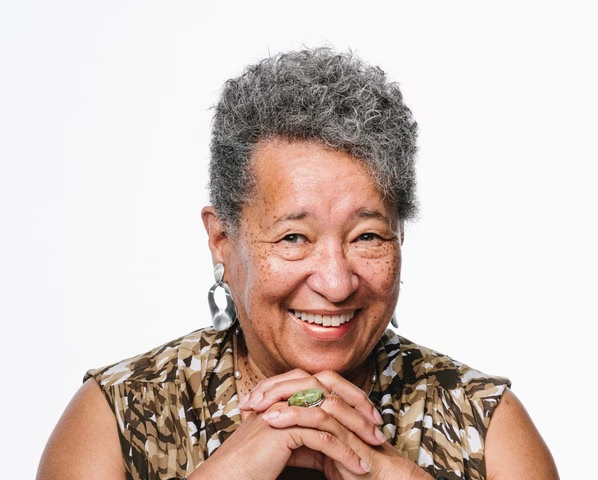
Quilts have always been part of my family. My mother quilted to keep us warm in our cold, drafty house, so I grew up understanding quilts as both practical and deeply connected to care. I never learned to quilt from her, but I understood what those quilts meant to our family. After retiring from a 30-year career as a school librarian, I turned to quilting as a new creative path. Inspired by the artistry I saw in quilt books and museums, I began making art quilts—not simply for warmth, but as a form of artistic expression. Storytelling quickly became central to my work, especially stories about difficult subjects. I’m drawn to the contrast between challenging themes and the beauty, familiarity, and comfort of fabric and quilts. That contrast makes quilting a powerful way for me to explore and share stories.
Who or what inspires you?
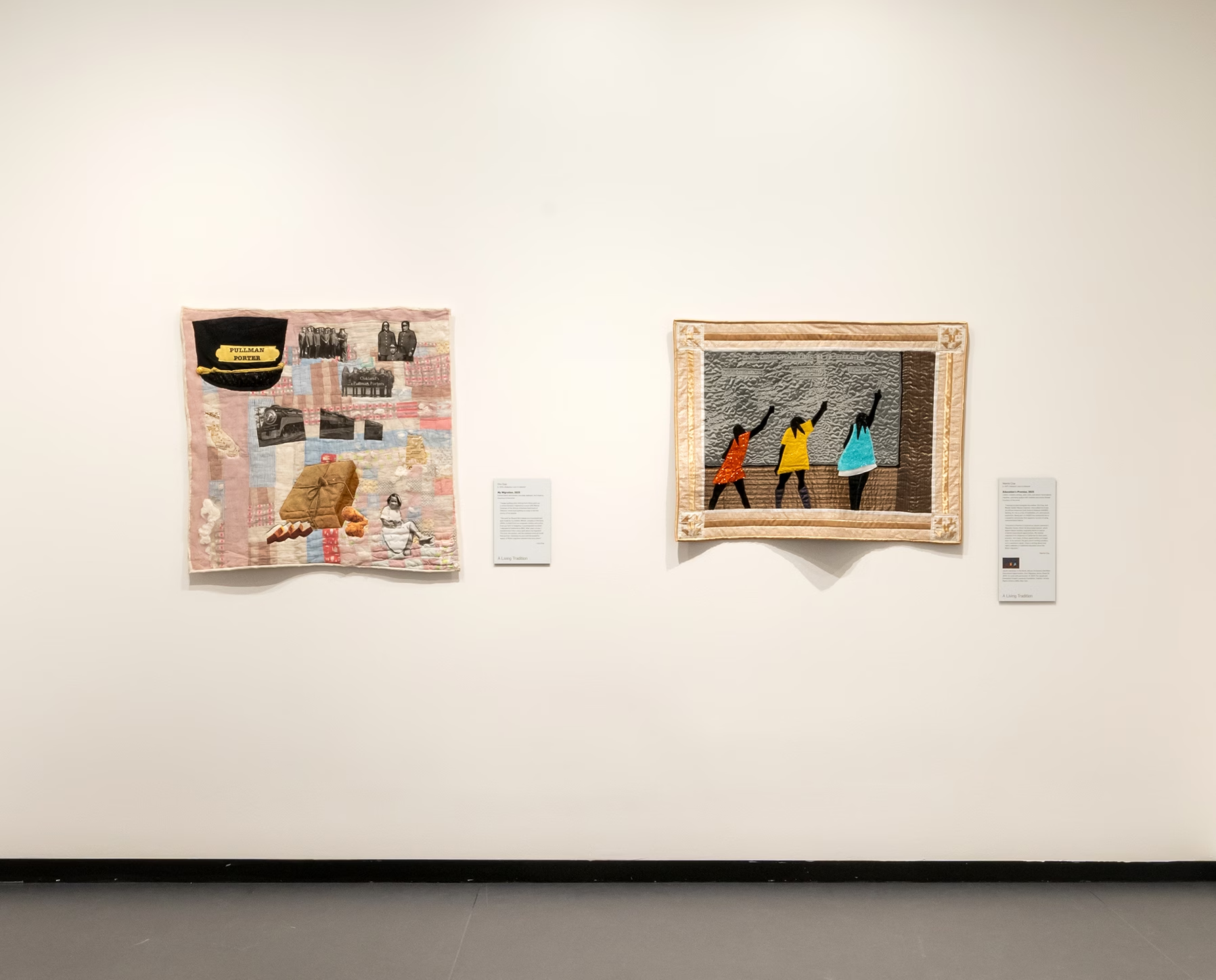
My family and the quilting communities around me are major sources of inspiration. My daughter, Niambi, who has a quilt right beside mine in the Routed West exhibition, introduced me to quilting by taking me to my first class, where I made a small quilt postcard. That experience changed the direction of my life. The class was taught by Marion Coleman. She became my mentor and encouraged me to see quilting as a way to find my voice and tell my own stories. Her influence continues to shape my work. I’m also inspired by the quilting community. The African American Quilt Guild of Oakland gives me a place to share ideas and grow, while the National African American Quilt Guild connects me with quilters online and beyond my local community. Together, these relationships provide inspiration, encouragement, and space to learn and experiment.
What ideas or experiences have been most influential in shaping the themes you explore in your work?
My quilts tell my story. I draw on my own experiences and family history to honor loved ones, preserve memories, and keep stories alive. My mentor once told me, “We have to tell our story; we can’t expect someone else to get it right.” That idea continues to guide my work. My work as a school librarian for more than three decades also shapes my practice. I approach many quilts with research, especially when exploring social justice issues. I seek out buried or underlying facts to illustrate the history and context behind a subject. This process allows my quilts not only to express my perspective, but also to educate, preserve stories, and encourage others to learn. My quilts are a way to tell stories and use art for reflection, commentary, and education.
What role do materials play in your creative process?
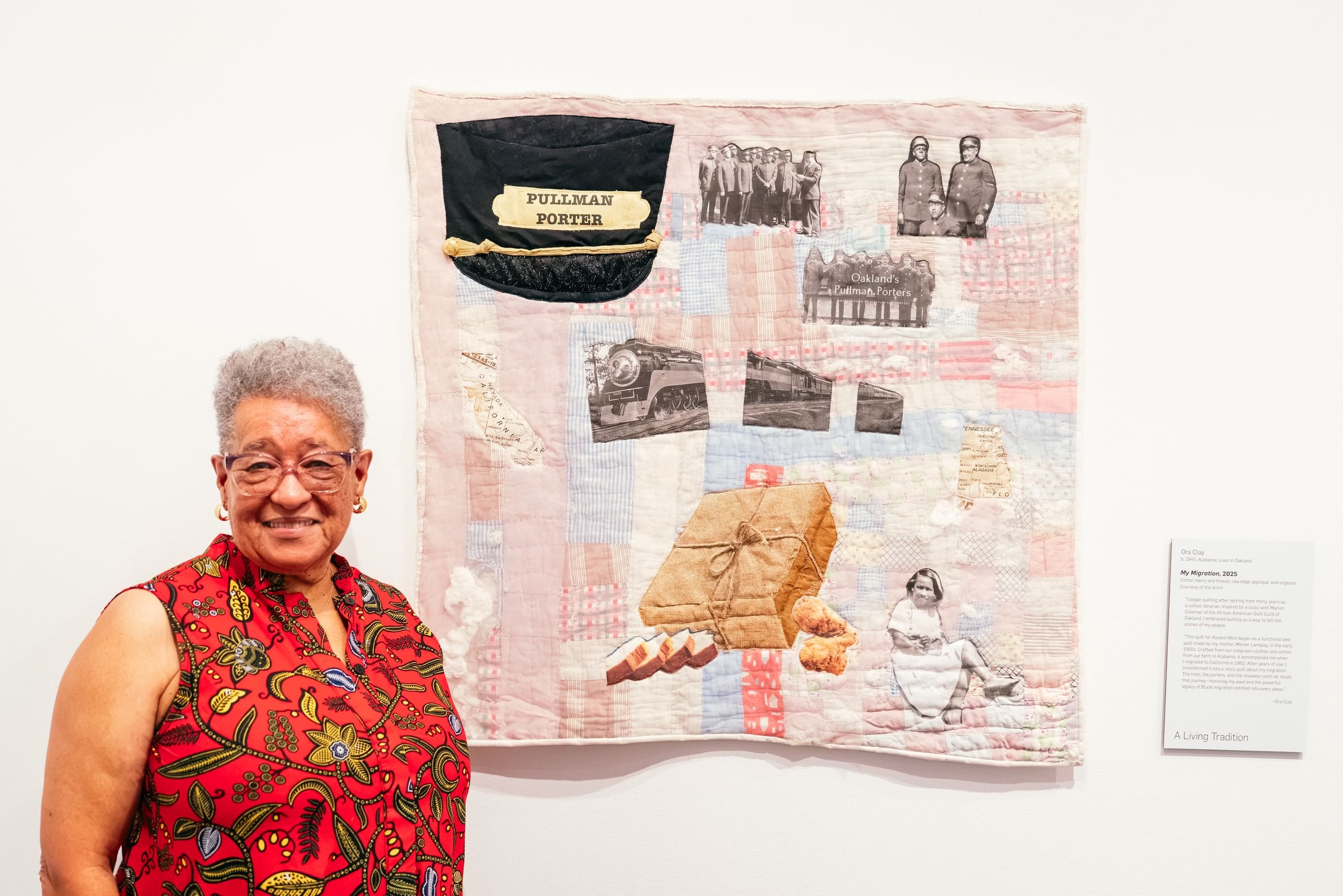
Choosing fabric is one of the most important parts of my creative process. For me, fabric is paint, the medium I use to create images, express ideas, and tell stories. Some fabrics I inherited from the collection of my mentor, Marion Coleman, so her memory continues to be part of my work. I also love using recycled and repurposed fabrics, especially when they carry personal meaning. A piece of clothing can bring its own history to a quilt, such as my brother’s shirt as part of a quilt for his widow. Fabric carries memory, and that history becomes part of the story I am telling. One of my most meaningful recent projects uses a quilt my mother made. No longer useful as a bed quilt, it has become the foundation for an art quilt about my migration, on view in Routed West. Transforming my mother’s quilt into a new work connects her story to mine and gives new life to something she created. In doing so, I’m carrying forward not only the fabric, but the love, history, and memories embedded in it.
How have your own experiences of migration, relocation, or finding home influenced your artistic practice and the stories you tell through your work?
When the call for participation in Routed West was announced, I was excited to have the opportunity to tell my own migration story. After reading Isabel Wilkerson’s The Warmth of Other Suns: The Epic Story of America’s Great Migration (2010), I began to recognize my journey as part of the larger story of the Great Migration. My quilt tells the story of my move from Alabama to California and reflects on what migration means to me. Moving is not simply about leaving one place for another. We carry memories, family, culture, and experiences with us. Making this quilt for the exhibition helped me reflect on how the places we’ve lived, the people who have influenced us, and the experiences we’ve shared shape who we become. The quilt honors my journey and claims my place within the broader history of migration.
Routed West: Twentieth-Century African American Quilts in California is organized by the Berkeley Art Museum and Pacific Film Archive. The exhibition is curated by Elaine Y. Yau, Associate Curator and Academic Liaison, with Matthew Villar Miranda, Former Curatorial Associate.