


Patchwork quilts by African American makers are a unique kind of archive. Their textures, patterns, and softness can capture memories and stories that would otherwise remain intangible. This fall, quilted objects in the exhibition Routed West: Twentieth-Century African American Quilts in California unfold stories related to Black people’s movements westward during the Second Great Migration. Between 1940 and 1980, nearly five million African Americans left the South for urban centers throughout the country, including those along the West Coast. Distinct from the earlier arrivals of Southerners between 1910 and 1940, the Second Great Migration to California was defined by the pull of wartime jobs coupled with migrants’ determination to flee the racist terror that surrounded their lives.
Southern Roots
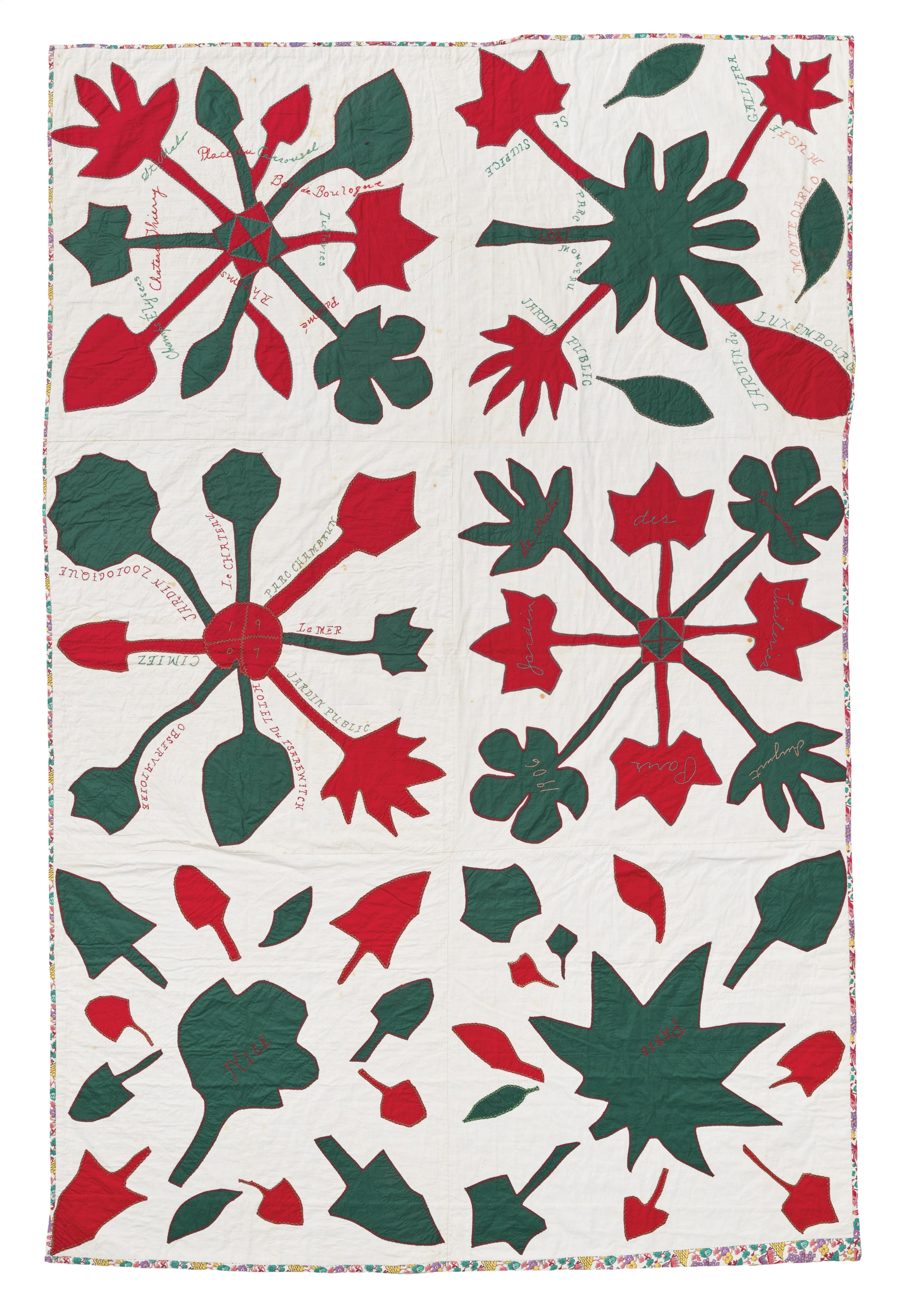
The story of Routed West begins in the antebellum South, where life revolved around plantation systems that brutally enslaved Black people to build wealth for white elites. These social relations structure the history of a quilt made by the oldest individual in NMWA’s exhibition, Hattie “Strawberry” Mitchell. Mitchell was born into slavery, lived through the Civil War and Emancipation, and remained in service to the family of banker William Johnston of Macon, Georgia, until her death in 1942. She worked as the family house servant.
According to Johnston family oral history, Mitchell’s leaf appliqué quilt was made between 1907 and 1908, following a 1906 trip to France, in which Mitchell accompanied the family. At each of the locations they visited, they collected leaves used by Mitchell as patterns for cotton fabric, which she then arranged and appliquéd onto undyed natural cloth with decorative stitching. She subsequently embroidered the names of the places, tracing Johnston’s looping handwriting.
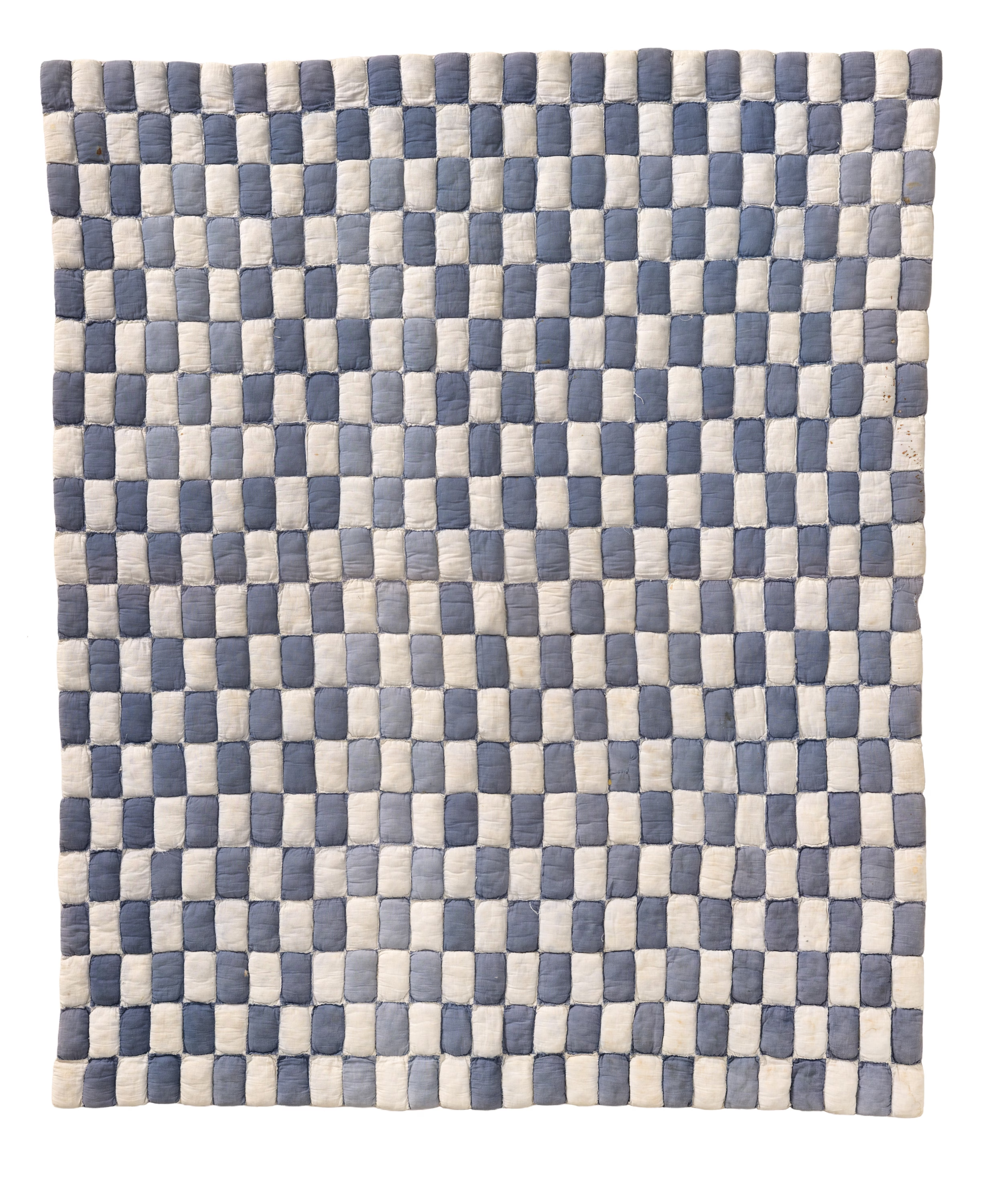
Other quilts speak to the creative repertoires of Black women who were born after Emancipation and whose daughters and grandchildren would carry their traditions out of the South. In the case of Annie Crawford’s quilt made of small cotton sacks manufactured to hold tobacco, she gathered her materials over seven years. She washed, dyed, stuffed, and stitched together each group of five hundred and forty “puffs” to construct her singular creation. In her hands, the raw materials central to the trafficking of her ancestors shed their commercial markings in a quilt intended for the enjoyment of her descendants, who eventually made their lives in Berkeley, California.
Tending Generations
Quilts, useful and portable objects, could be sent with migrants to keep themselves warm and protected, and to keep connections with loved ones close as they traveled away from home.
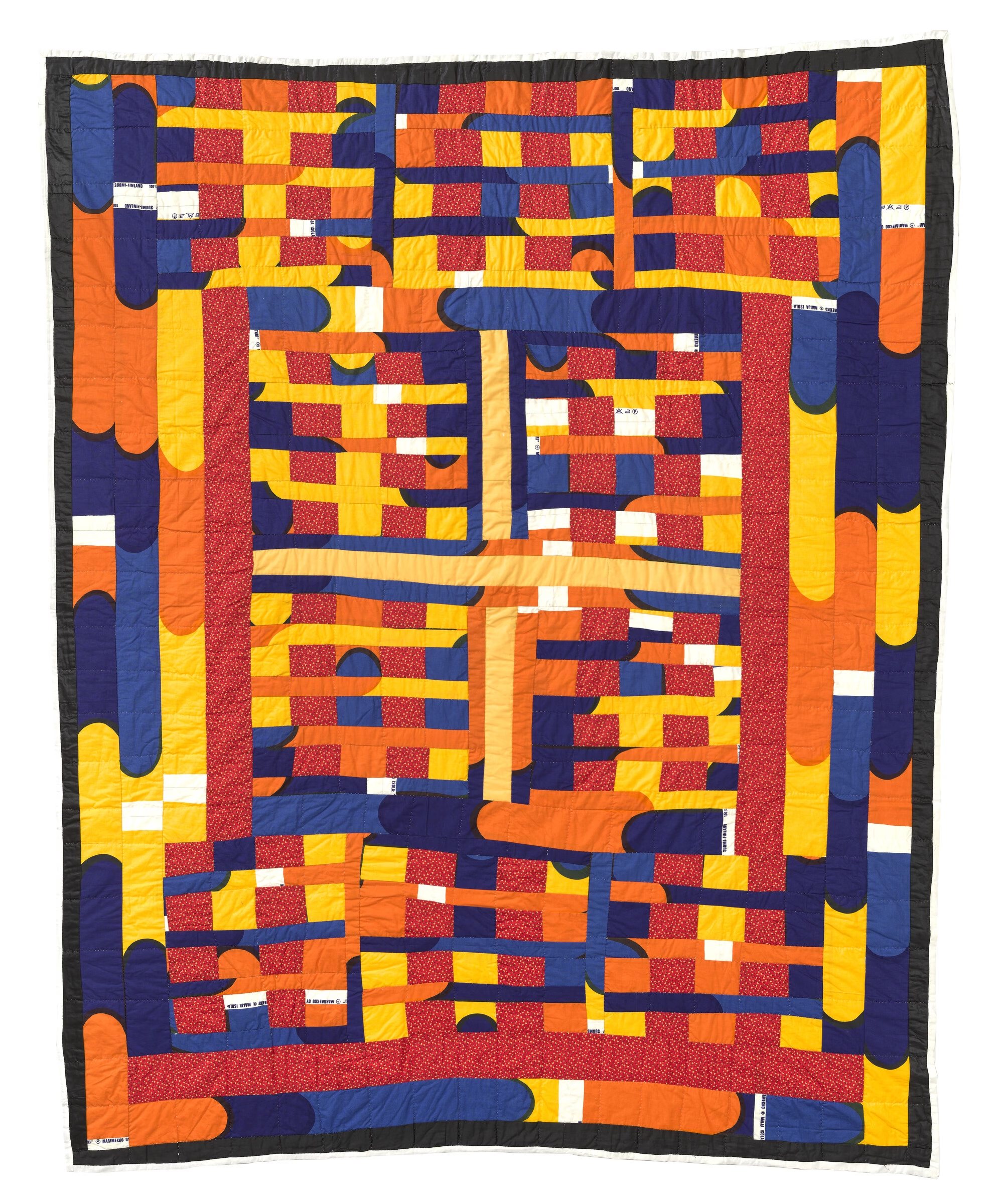
This was true for Sherry Ann Byrd, who had loved quilt-making since she was a young girl in Texas. She often observed and helped her maternal grandmother, Gladys Henry, make quilts, but was unable to nurture this passion as she completed college, married, started a family, and moved to Richmond, California. Intuitively reaching for quilt-making during a period of intense grief, Byrd recalls, “I wrote home to her [Henry] and asked if she would send me some of her already pieced blocks to learn from, [be]cause I was now trying to create my own quilts. She responded with quite a few.” These blocks show “the offbeat, asymmetrical uniqueness” that Byrd calls “m-provisational”: a word with a sense of swagger and playfulness used to describe quilts created in a “relaxed but fast-paced manner, without a lot of fuss or precision” and made mostly for family use. A later quilt made of salvaged Marimekko fabrics carries a sense of visual dynamism with a relatively limited color palette and the playful curves of the original print.
Carried and Kept
Roland L. Freeman’s pathbreaking book A Communion of the Spirits: African-American Quilters, Preservers, and Their Stories recognized quilt-keepers as essential to maintaining a quilt’s ties to the past. Whether physical keepers, storytellers, family historians, teachers of the craft, or all of the above, preservers are central to the community in which quilts are most alive.
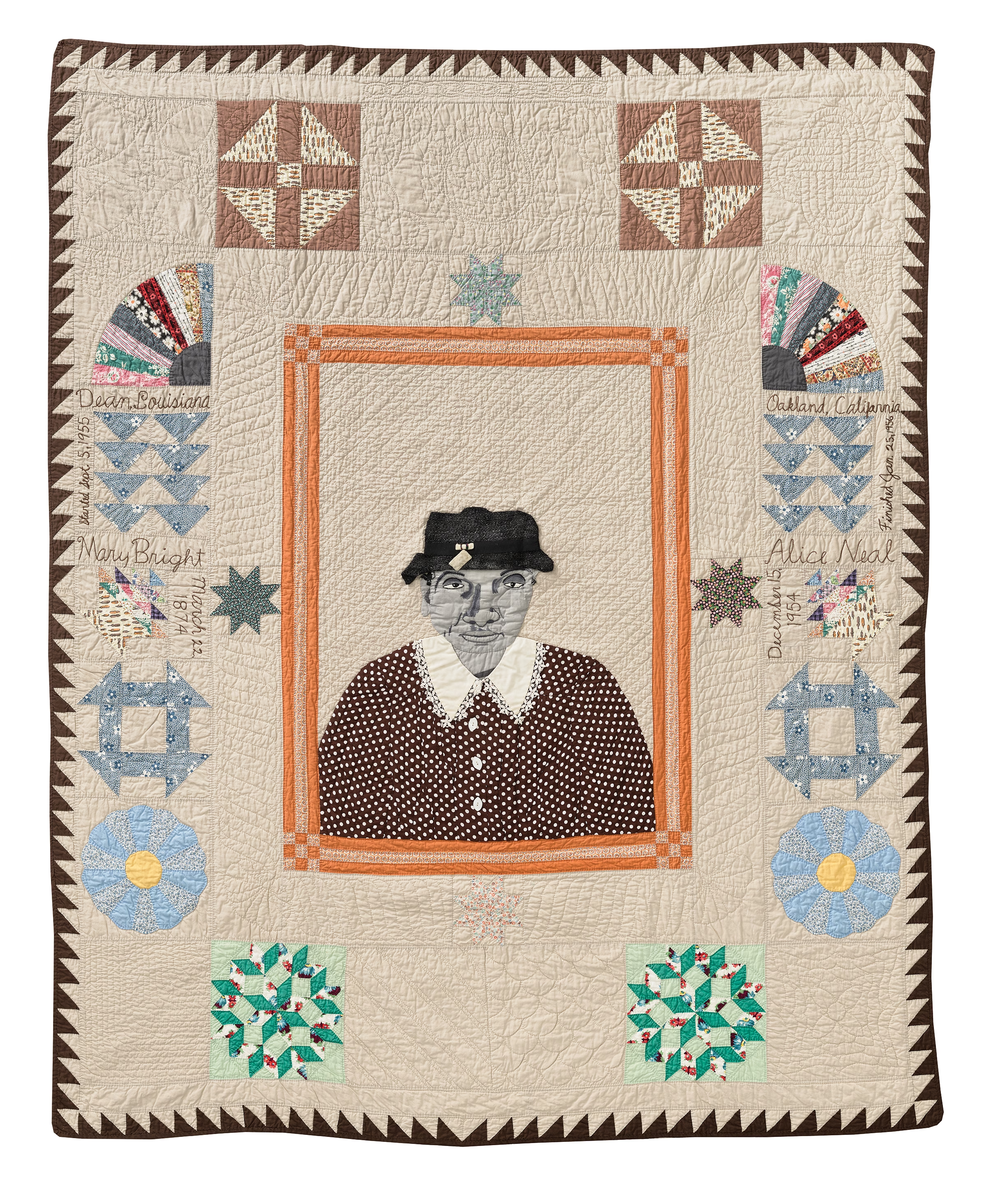
Growing up in Marion, Louisiana, Alice Neal is one such quilt-keeper. In an interview with collector Eli Leon, Neal recalled that, especially among poor families, quilts often recorded and safeguarded family genealogies in a culture where family bibles were scarce. After her mother, Mary Bright, died in December 1954, Neal began work on her exquisite portrait quilt, imbuing it with the memory of her mother. At its center is a portrait of Bright that Neal reproduced from a photograph, using leftover material from a dress Bright had sewn for herself, a lace collar, buttons, and embroidery. She also crafted a replica of one of Bright’s hats, which snaps off to reveal a silk cap that she sometimes wore. Four Nine Patch blocks anchoring the portrait’s frame symbolize the first pattern that Neal learned from her mother; Stars of Lemoyne blocks appearing just outside the frame are a nod to her lifetime spent in Louisiana. Above Bright’s likeness are two Churn Dash blocks, representing the rural labor that provided her family with milk and butter, and below are two stars to invoke one of her favorite hymns. Taken as a whole, Neal’s quilt offers its tribute in the language of her artistic inheritance.
Collective Caregiving for the Future
The formation of quilt guilds and organizations, especially from the 1970s onward, points to the inescapable truth that quilts and the practices around their making have thrived apart from art museums for at least two centuries. Fine arts and modern art museums have been founded on aesthetic hierarchies in which quilts, “women’s work,” craft, and folk art were marginalized and devalued in comparison with the “fine arts” of painting and sculpture. This marginalization was compounded when African American women artists were the ones struggling for recognition.
Routed West strives to follow the ethics of care that underline the flow and flourishing of quilts within African American communities. It guides how fabrics are salvaged and chosen, puts hands to work to fill physical or emotional needs, cares for past memory as much as present and future kin, and calls forth the quiltmaker’s own image of beauty. The stories gathered here include California as part of their journey, but they are not exclusive to the Golden State. The “motheroot” of African American quilt-making carries these complex realities. When we can hold and understand these connections, we may come closer to honoring the lessons of care and repair that quilts carry forward.
This essay is adapted from Elaine Y. Yau, Routed West: Twentieth-Century African American Quilts in California (Berkeley and New York: Berkeley Art Museum and Pacific Film Archive and Delmonico Books, 2025).
Visit NMWA’s Museum Shop to pick up your own copy or buy it online.