
Today only: Your gift TRIPLE matched

Donate by midnight for 3X the impact. Can women artists count on you?    

National Museum of Women in the Arts

5 Fast Facts: Women Artists from Antwerp to Amsterdam

Blog Category:  5 Fast Facts
A detailed oil painting of a lush forest-floor still life featuring an asymmetrical arrangement of various flowers, including tall irises and morning glories, bell-shaped foxgloves, a central bright orange lily-like bloom, and clusters of white and pink blossoms. This is set against a dark, muted background.

Impress your friends with facts about five artists whose work is included in Women Artists from Antwerp to Amsterdam, 1600-1750, on view through January 11, 2026.

1. Maria Faydherbe

Maria Faydherbe (1587-after 1633) didn’t suffer from imposter syndrome. She recognized her own talent and signed her sculptures so that others would too. Faydherbe ruffled feathers of male peers, who described her pride as brazen and boastful. Today her skill is cherished. Two of Faydherbe’s works are considered official Flemish Masterpieces.
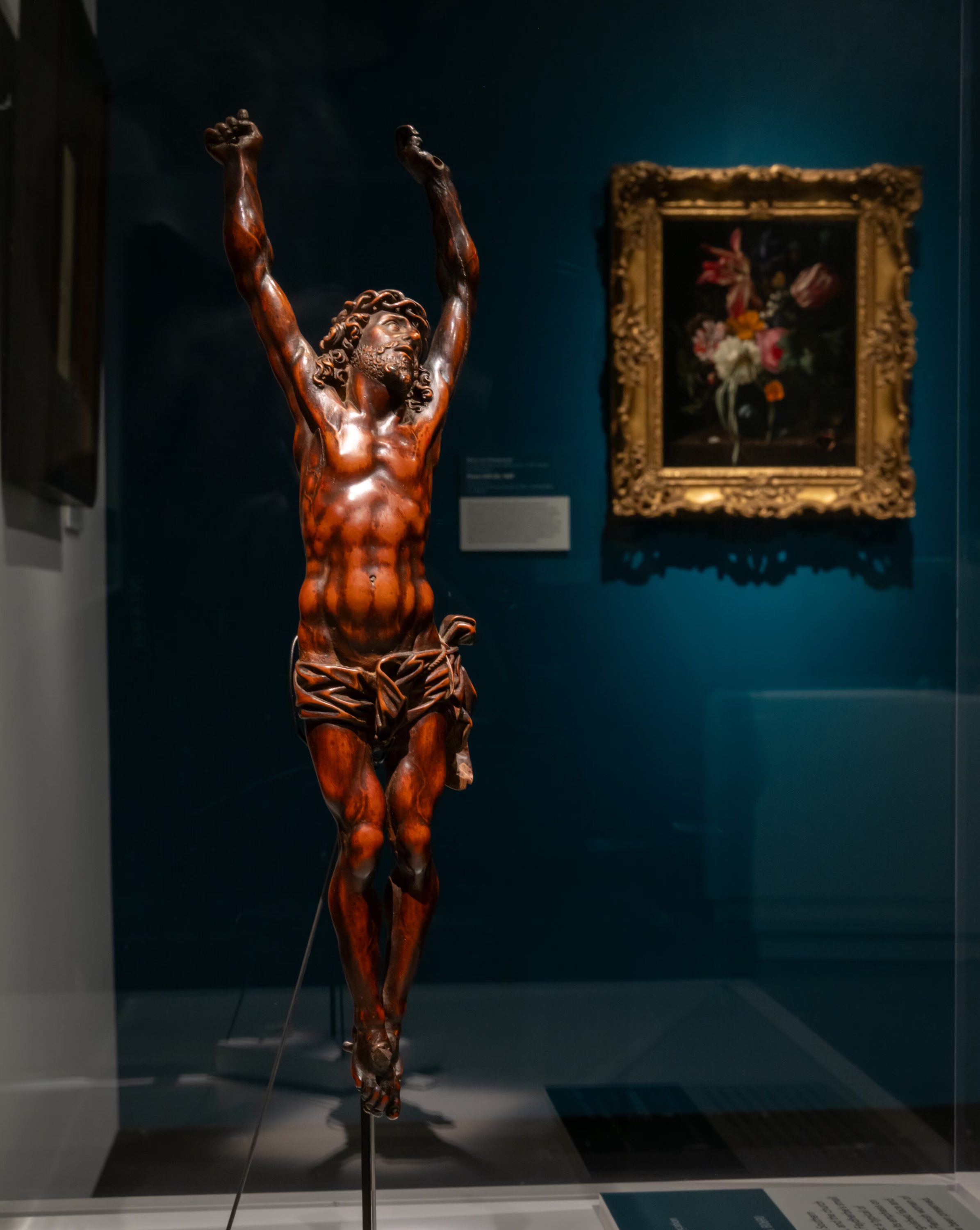
A sculpture of Jesus on the cross is displayed in a museum, with arms raised and head tilted back. In the background, there is a framed floral painting on a blue wall.
Installation view of Women Artists from Antwerp to Amsterdam: 1600-1750, featuring Maria Faydherbe’s Crucifix (1625–30), on loan from  Museum Hof van Busleyden, Mechelen; Photo by Kevin Allen

2. Johanna Helena Herolt

The elder daughter of renowned artist-scientist Maria Sibylla Merian (1647-1717), Johanna Helena Herolt (1668-after 1723) achieved fame as a natural history illustrator in her own right. She contributed distinctively bold three-dimensional compositions to landmark compendiums such as the florilegium, compiled by patron and amateur botanist Agnes Block (1629–1704), and the Moninckx Atlas. Alida Withoos (featured below) also contributed illustrations to these projects.
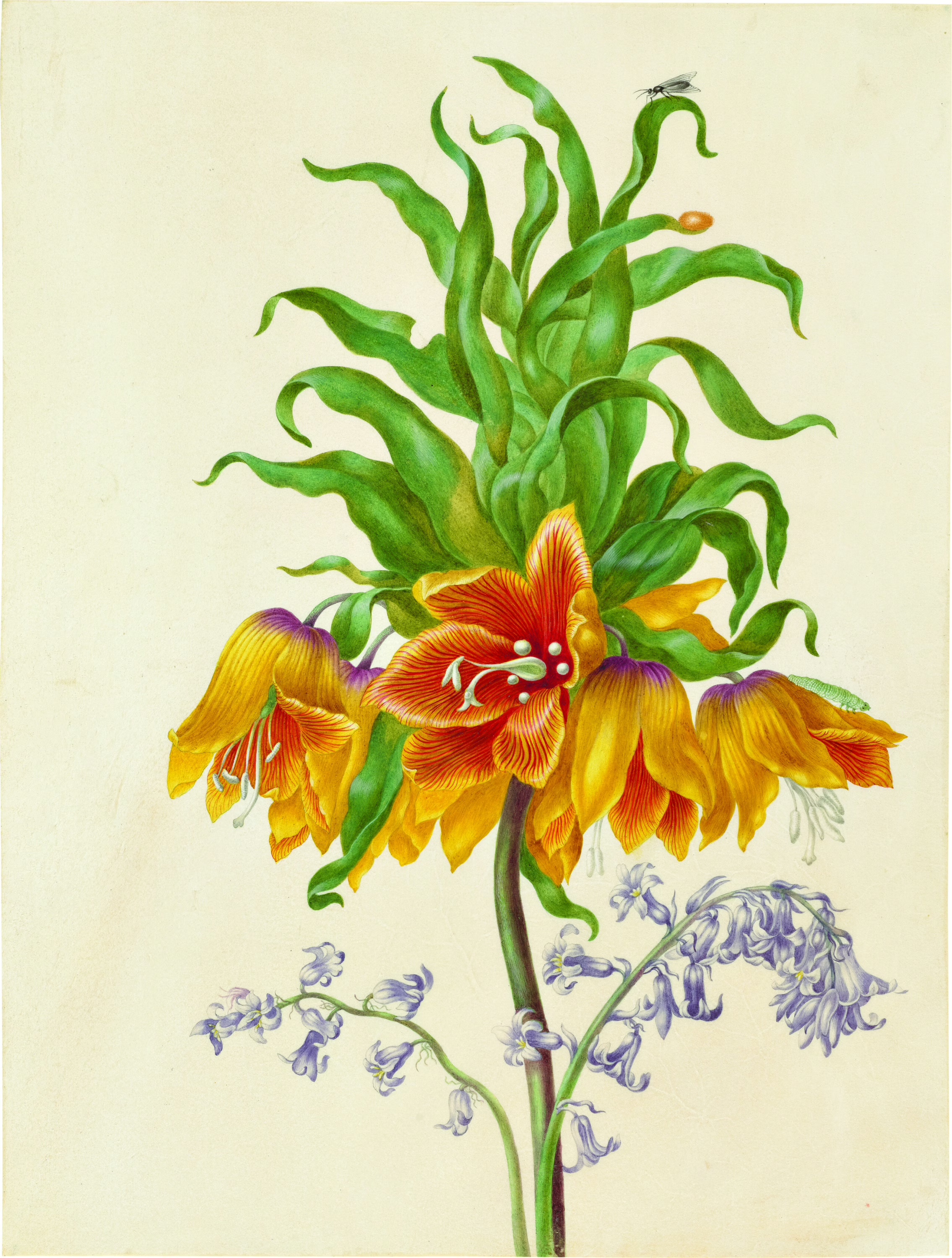
A colorful botanical illustration of an orange and red flower with ascending green leaves and purple under flowers.
Johanna Helena Herolt, Crown Imperial (Fritiallaria imperialis), Two Wild Hyacinths (Scilla non-scripta) and Insects, ca. 1700; Watercolor and bodycolor on vellum, 15 x 11 1/4 in.; Oak Spring Garden Foundation, Upperville, Virginia

3. Joanna Koerten

Joanna Koerten (1650-1715) explored various techniques but is perhaps best known for her remarkable paper cuttings. From afar, these works resemble drawings or prints. Close up, viewers discover that every compositional line is actually a minute incision. For good reason Koerten was called “Scissors Minerva,” referring to the Roman goddess of craft.
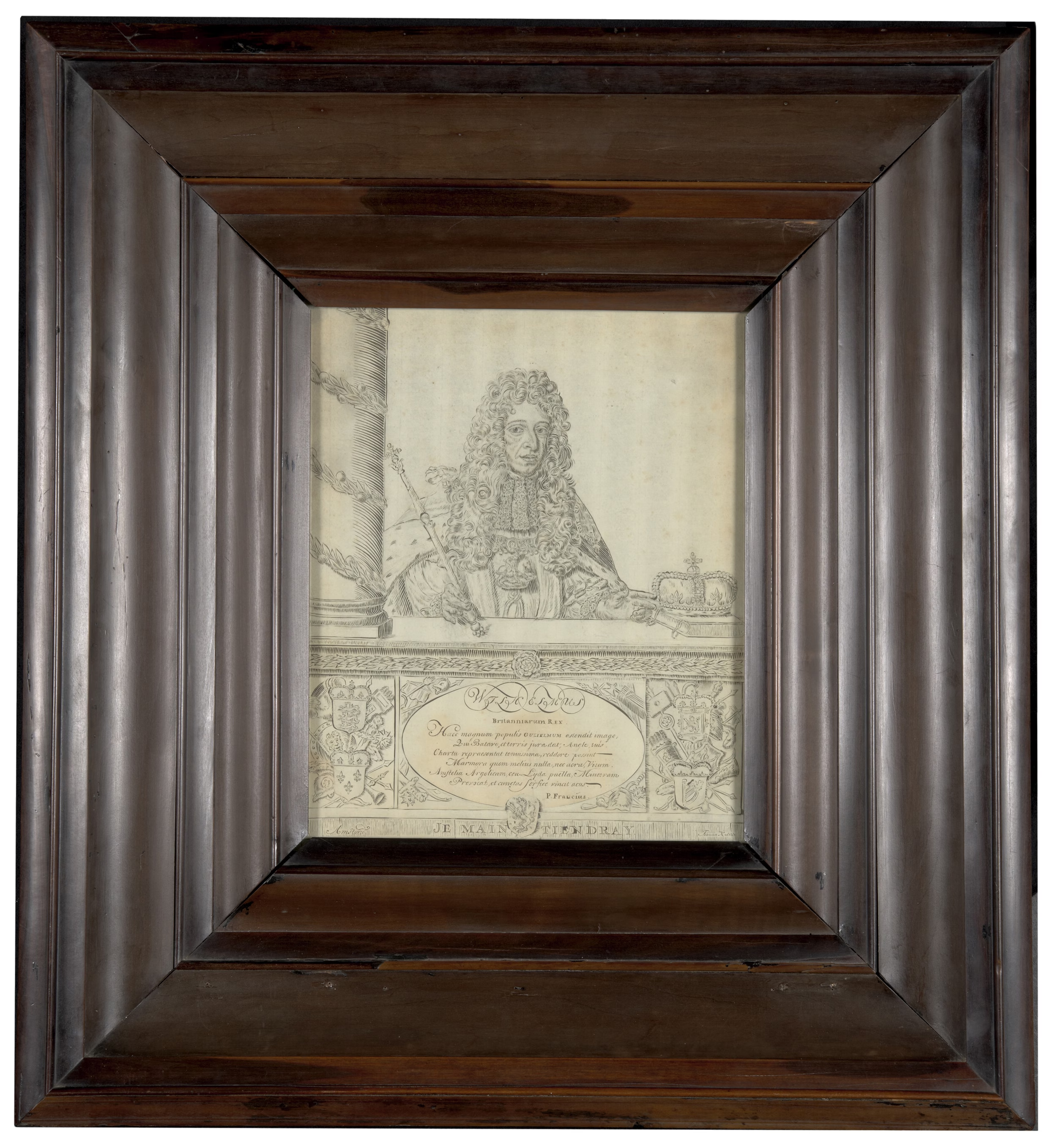
Framed black and white portrait of a person in historical attire sitting at a table with an inscription below, all within a wide, dark wooden frame.
Johanna Koerten, Portrait of William III, ca. 1700; Paper cutting, 12 3/8 x 10 1/8 in.; Stedelijk Museum De Lakenhal, Leiden, on long-term loan from Ars Aemula Naturae, inv. B 12L

4. Anna Maria van Schurman

Multitalented artist Anna Maria van Schurman (1607-1678) also advocated for women’s education. She became the Dutch Republic’s first “coed”—attending university lectures concealed by a curtain lest her presence perturb male students. Three centuries later, Judy Chicago (b. 1939) gave this trailblazer a seat at the table in The Dinner Party (1974-79).
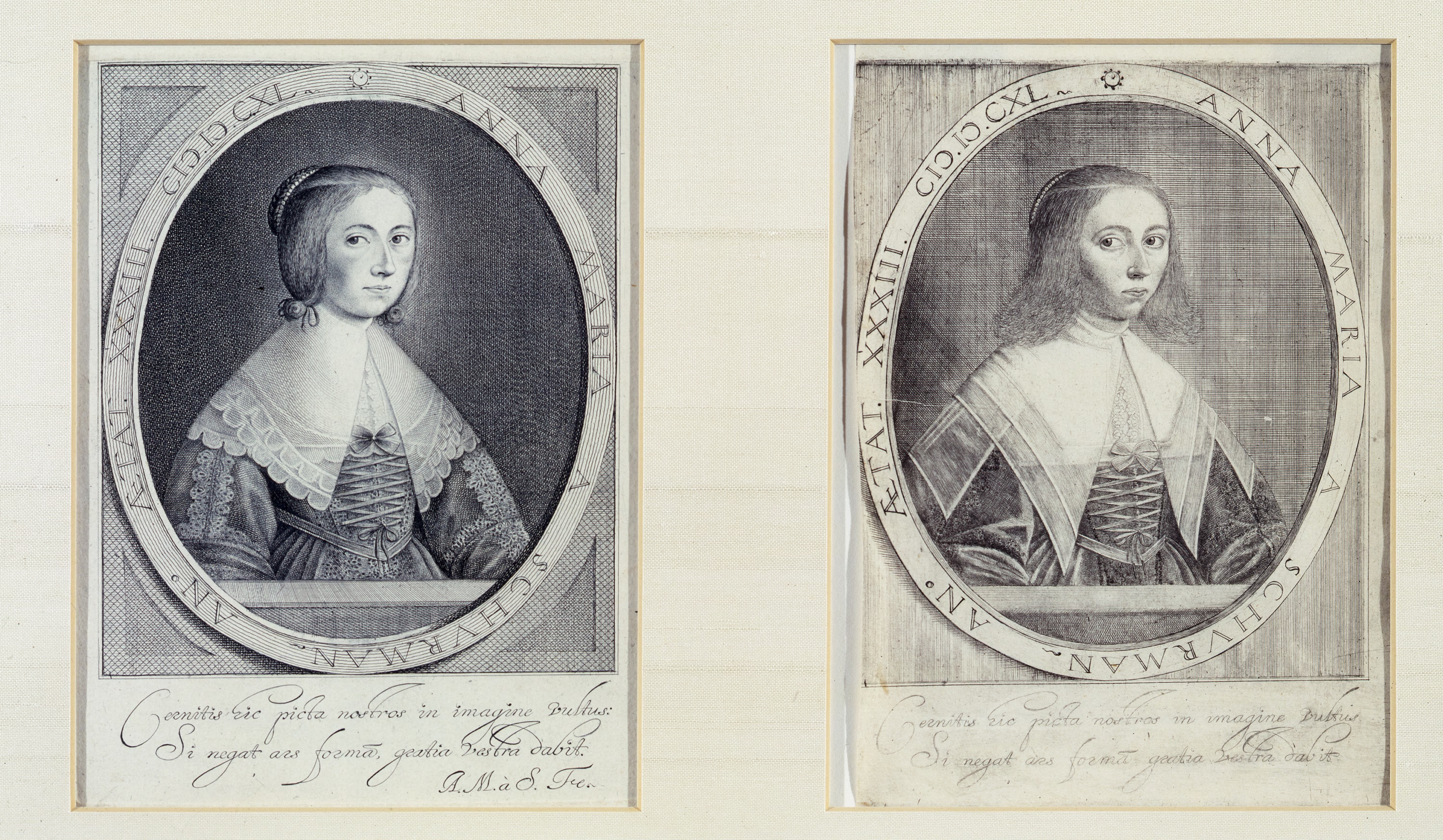
Two historical self-portraits, one done by etching and one by drypoint. In both the woman looks to be in 17th-century clothing. Text surrounds the portraits and cursive writing is below both.
Left: Anna Maria van Schurman, Self-Portrait, 1640; Engraving on paper, 8 1/2 x 6 3/8 in.; National Museum of Women in the Arts, Gift of Wallace and Wilhelmina Holladay | Right: Anna Maria van Schurman, Self-Portrait, 1640; Drypoint on paper, 9 x 5 7/8 in.; National Museum of Women in the Arts, Gift of Wallace and Wilhelmina Holladay

5. Alida Withoos

Alida Withoos (1660/62-1730) painted dramatic, dynamic still lifes in the Italian style of sottobosco (“forest floor” or “undergrowth”). A fusion of fact and fiction, Withoos’s works depict realistic flora and fauna thriving in imagined settings. Similarly inspired, contemporary artist Maggie Foskett (1919-2014) foraged and arranged natural elements in her images.
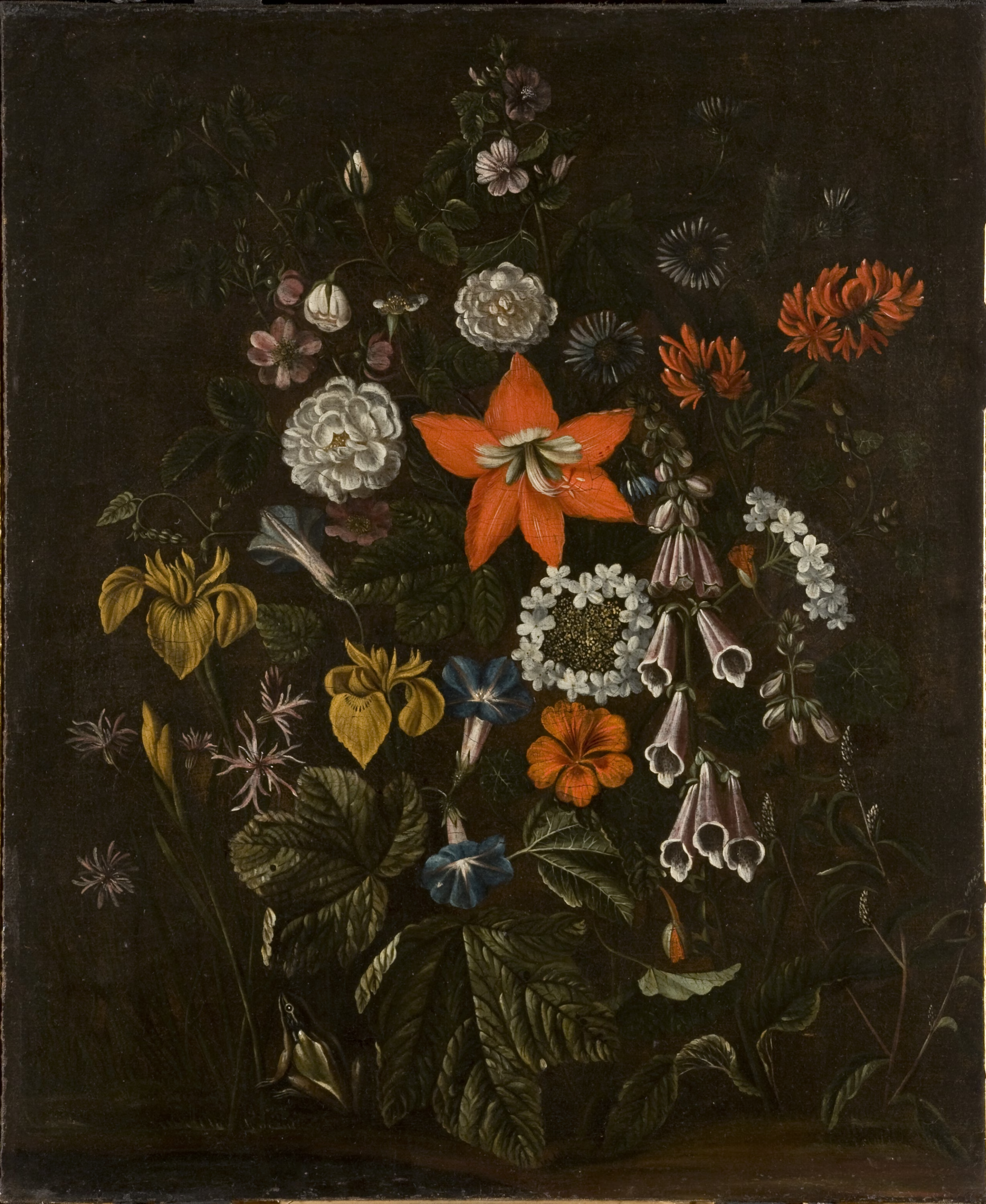
A detailed oil painting of a lush forest-floor still life featuring an asymmetrical arrangement of various flowers, including tall irises and morning glories, bell-shaped foxgloves, a central bright orange lily-like bloom, and clusters of white and pink blossoms. This is set against a dark, muted background.
Alida Withoos, Still Life with Irises, Morning Glory, Fox Gloves, a Red Lily and Other Flowers on a Forest Floor, ca. 1700; Oil on canvas, 27 1/4 x 22 1/2 in.; National Museum of Women in the Arts, Gift of Wallace and Wilhelmina Holladay

Related Posts