


Instructional Objectives
Visual Arts
Students will:
- Recognize and identify abstraction in a work of art.
- Understand and verbalize feelings expressed through art.
- Understand that working collaboratively builds community in the classroom.
Writing
Students will:
- Understand that creative writing can help them make connections with art.
- Recognize the formula for the classical structure of the haiku.
- Understand that the haiku often focuses on nature or seasons.
Featured Artworks
Instructional Plan
Observe

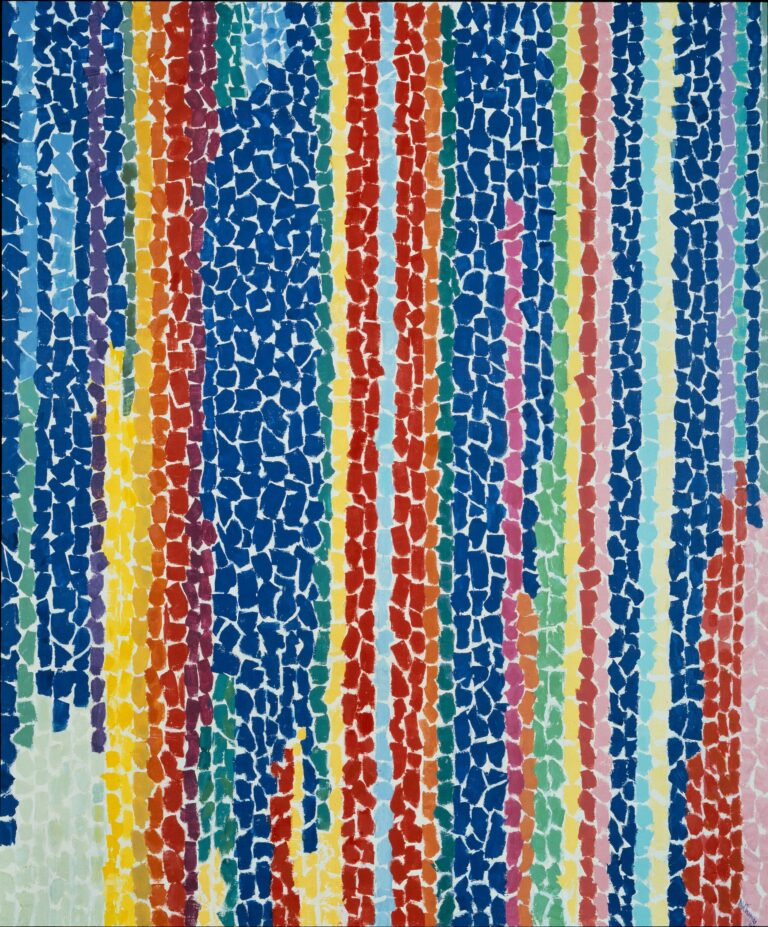
Lead a discussion about Alma Woodsey Thomas’s Iris, Tulips, Jonquils, and Crocuses. Don’t share the title just yet.
- Describe what you see when you look at Thomas’s painting.
- What do you think about what you see?
- What questions or wonderings do you have about what you see?
Then ask students these directed questions:
- What do you think this abstract painting is about?
- How many different colors do you see in this work? What does each color remind you of? What might the colors represent?
- Which of the four seasons, winter, spring, summer, or autumn, do you think this work represents the most? What do you see that makes you say that?
Next, share the title of this work.
- Now that you know the title of this work, what new thoughts do you have?
- What new questions come to mind?
Compare


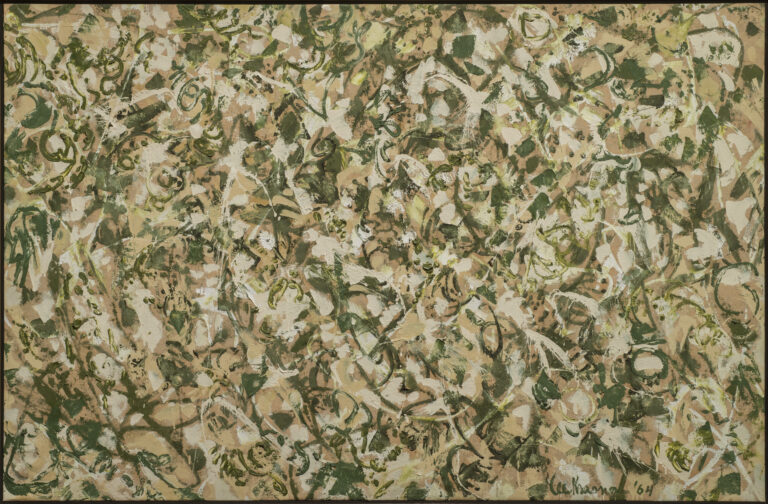
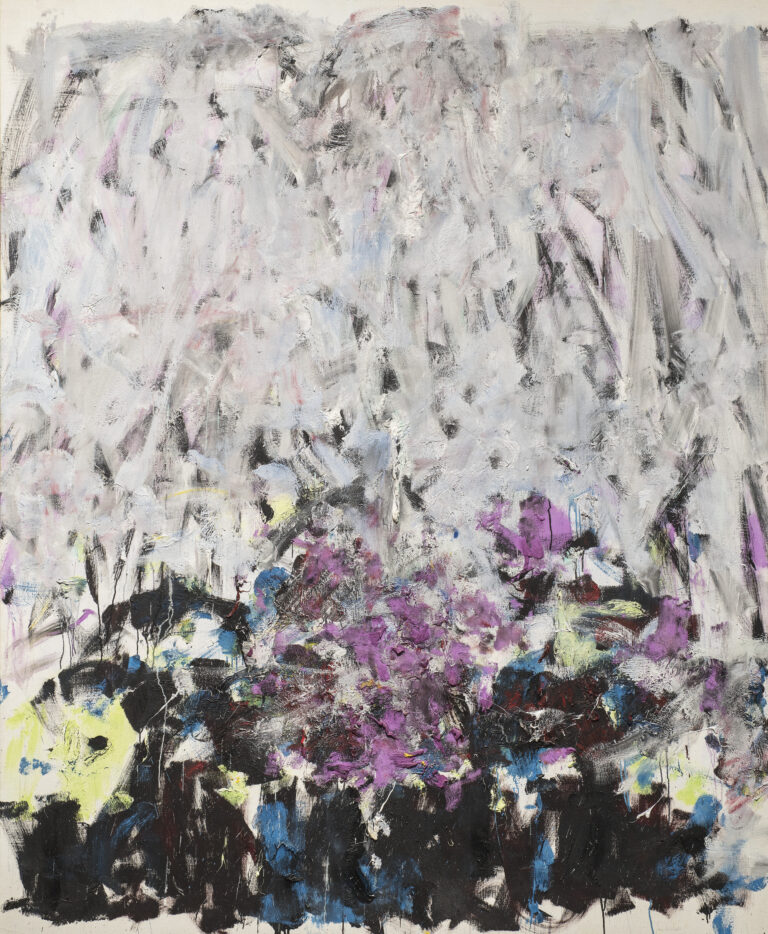
Now compare with The Springs by Lee Krasner and Sale Neige by Joan Mitchell. Lead brief conversations about each work, drawing students’ attention to the artists’ color and mark-making choices.
During the course of each conversation, share the title of each work with the students.
How does knowing the title change your feelings about the work? Do you like it more or less? Why?
- How does each work make you feel?
- How does each artist represent nature?
- What question would you ask each artist given the opportunity?
As a class, compare these two works side-by-side, discussing similarities and differences. Finally, take a vote, asking students which works they would most like in their room at home.
- What do you like about the works you chose?
- If you created your own style of expressing nature, what would it look like?
Express

Use adjectives to describe what emotions you think the artist is trying to convey in this work. What might this artist be trying to tell us through this work?
- What artistic process(es) do you think this artist used?
- What ideas do you have regarding how this work was created? Regarding the artist’s color choice?
Next, ask students to think about how they are feeling about the current season (e.g., temperature, relative daylight, anticipated holidays/school breaks). If helpful, have students select an emotion emoji that expresses their current state.
- I wonder how you would express your feelings or emotions through color choice and mark-making?
- If you are sad, what colors represent sadness for you? If happy, what colors suggest joy?
- What types of lines and shapes reflect excitement? Anticipation? Anxiety? Anger? Happiness?
About Alma Woodsey Thomas

Thomas was born in Columbus, Georgia, in 1891. As a child, she occasionally visited her grandfather on a farm in Alabama, where flowers were plentiful. It was there that she learned to love nature’s bounty. As an adult living in Washington, DC, Thomas drew inspiration from the view of her garden from her kitchen window. Her abstract paintings represent her own special way of seeing the many flowers nestled in her garden. She expressed her feelings about her garden with color and mark-making, specifically by creating shapes, patterns, and designs.
Artistic Process

Of her process, Thomas said, “I got some watercolors and some crayons, and I began dabbling—little dabs of color that spread out very free—that’s how it all began. And every morning since then, the wind has given me new colors through the windowpanes.”
Create: Collaborative Collage
Share Thomas’s story and quote with your students, explaining that she is the inspiration for their collaborative collage art project.
Supplies:
- White craft paper, cut into 16-inch squares, one per student
- Mark-making supplies of your choosing, e.g: colored pencils, oil pastels, markers, watercolors, and charcoal
- Four large foam-core boards
- Bright, colorful paper, cut into one-inch strips
- Glue sticks
- Scissors
- Pencils
- Rulers
Activity:
- First, divide students randomly into four seasonal groups by counting off 1 to 4, to form Team Spring, Team Summer, Team Autumn, and Team Winter. All number 1s will be Team Spring; number 2s will be Team Summer; number 3s will be Team Autumn; number 4s will be Team Winter.
- Next, each team will brainstorm, using a web graphic organizer, to discuss and list the likely characteristics associated with their assigned season. Each student will use this information to create a color and pattern sketch of their design, using oil pastels or colored pencils.
- Finally, once all the designs are completed, each group will convene to discuss their group’s individual designs, and collectively decide on one design for their seasonal group. As Thomas did, students will lightly sketch their design onto the large foam-core board.
- Show students close-up photographs of Thomas’s work to point out her meticulous sketches, evident by the parallel vertical pencil lines that guided her in the preciseness of her artistic process. Then, students will begin to glue the colored, rectangular paper pieces on top of their sketched design onto the foam board, carefully leaving a little white space around each shape, as did Thomas.
Reflect
Write a haiku poem, a traditional form of Japanese poetry whose subject is related to nature or seasons, about what your abstract collage portrays. Is it an extreme weather condition, or something else related to your season of choice? Title your haiku.
Vocabulary
Art Concepts
Review the comprehensive vocabulary list, which provides a consistent description of visual arts concepts and defines the meaning of the art terms.
Credits
Terry V. Thomas, visual art teacher, Seaton Elementary School, Washington, DC, Public Schools, in collaboration with Adrienne L. Gayoso, senior educator at NMWA, in conjunction with the exhibition Magnetic Fields: Expanding American Abstraction, 1960s to Today (October 13, 2017, to January 21, 2018).